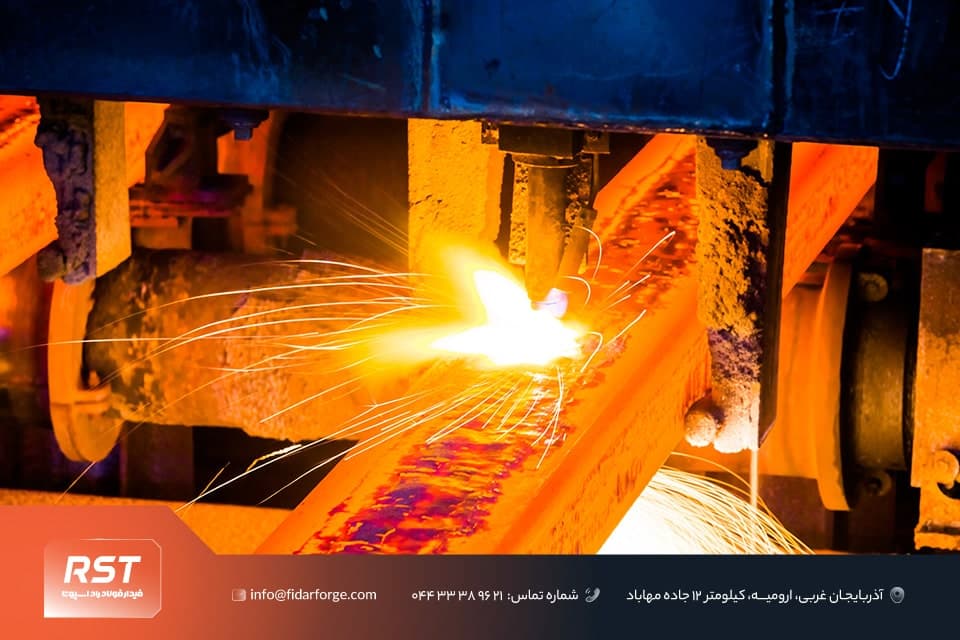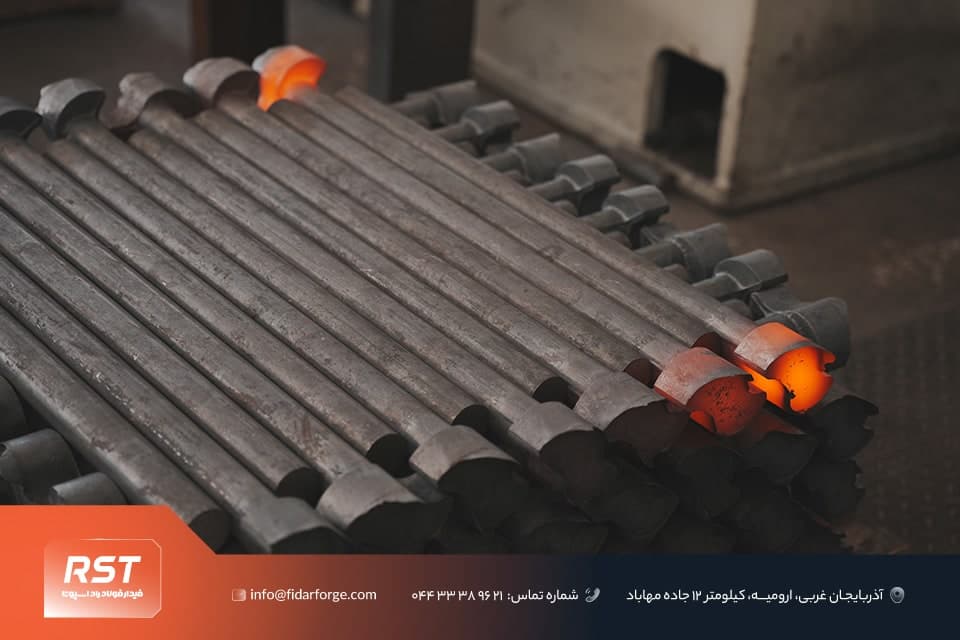
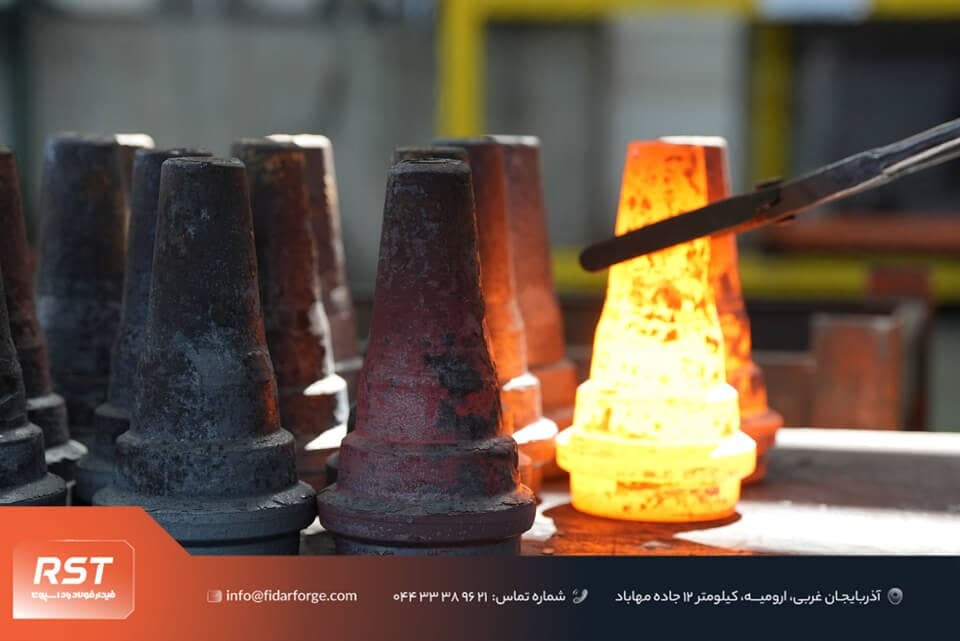
Forging, or smithing, is one of the oldest and most fundamental metal-forming processes, used for thousands of years to make tools, weapons and jewellery. What sets forging apart from other methods is that the metal is never fully melted: it takes the desired form through force and plastic deformation alone.
This means the mechanical and structural properties of the metal are not only preserved but, in many cases, improved. That is why forging is now recognised in advanced industries such as automotive, aerospace, energy and machine-building as one of the most important ways of producing high-strength, long-life parts.
This article is a complete guide to forging: from its definition and history to the types of process, equipment, materials, advantages and disadvantages, how it compares with other processes, its applications, new technologies and even the future of the industry.
What is forging?
Forging is a process in which metal is reshaped by pressure, blows or pressing. Unlike casting, where the metal is fully melted and poured into a mould, in forging the metal is deformed in the solid or semi-solid state. There are two main kinds of forging:
Hot forging
The metal is heated to a high temperature to make it more formable and easier to shape. Hot forging is used for large and complex parts.
Features
- Easier deformation
- Less risk of cracking
- Needs precise temperature control
Cold forging
The metal is shaped at room temperature. This increases its hardness and mechanical strength, but deformation is harder and needs more force.
Features
- A stronger finished part
- A smoother, more accurate surface
- Limited amount of deformation
A short history of forging
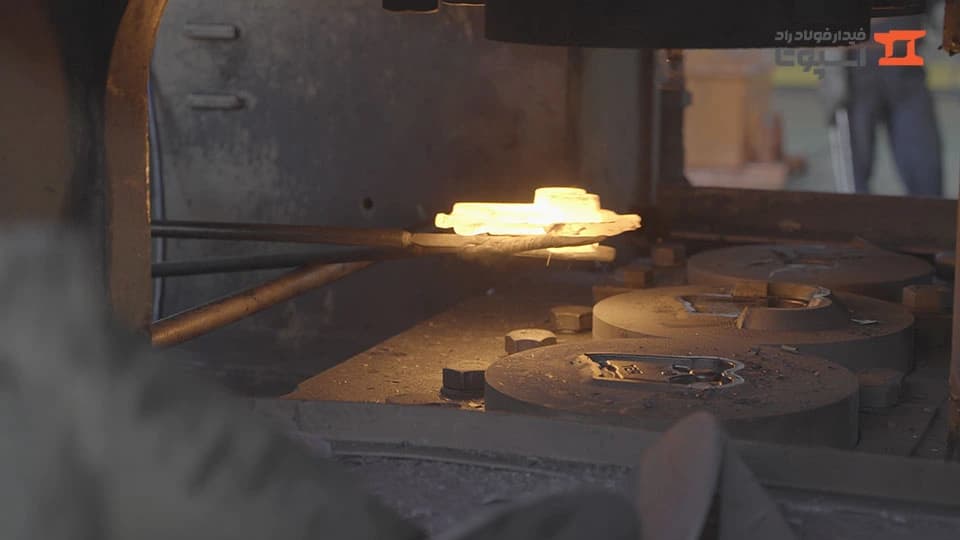
Forging is one of the oldest ways of working metal, going back several thousand years. As soon as people could extract metal from ore, they needed to shape it into tools and implements — and that was the beginning of smithing.
- Antiquity
In the Bronze and Iron Ages, smiths heated metal in simple furnaces and shaped it with hand hammers. Most of what they made were farming tools, weapons, blades and jewellery. Forging was not just a technical skill but a valued art, and smiths held a high social standing.
- The Middle Ages
With better furnaces and tools, smithing became a widespread trade. Swords, armour, horseshoes and weapons were among the smiths' most important products. In Europe, the smith became one of the key trades in towns and villages, and many everyday tools were forged.
- The Industrial Revolution (18th and 19th centuries)
With the steam engine and new mechanical tools, forging moved from a traditional hand craft towards industry. Steam hammers and mechanical presses arrived, making it possible to produce large, complex parts. Forging came to play an important part in building machinery, railway track and heavy industrial components.
- The modern age (20th century onwards)
Advances in technology took forging into a new era. Huge hydraulic presses, temperature control systems, precise dies and computer simulation made it possible to produce very complex parts with high accuracy. Today forging is used not only in heavy industry but also in advanced fields such as aerospace, defence, renewable energy and medicine.
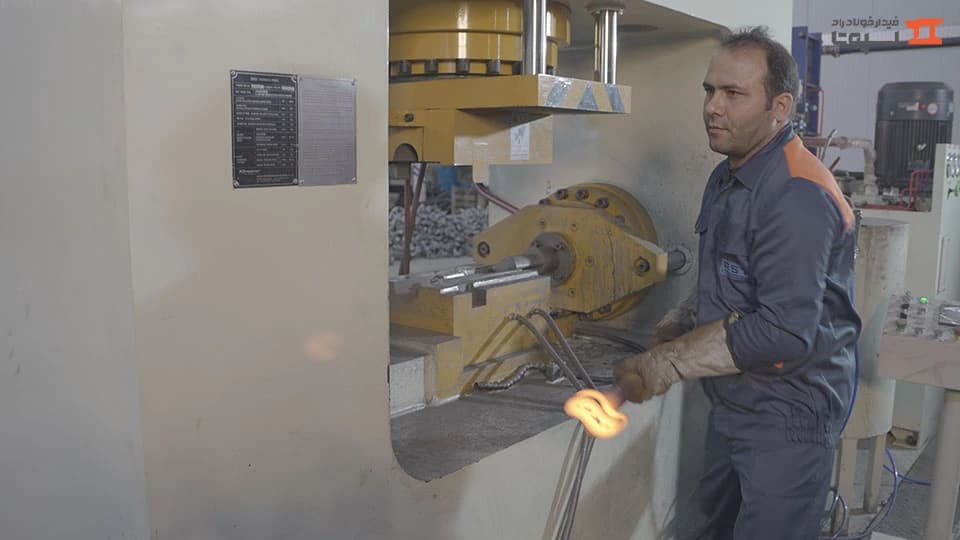
Types of forging process
Forging processes are grouped by the kind of force, tools and dies they use. The right method depends on the metal, the shape of the part and the accuracy required. Here are the most important types:
- Hand (hammer) forging
The most traditional kind of forging, done with a hammer and hand tools. The heated metal is placed on an anvil and the smith shapes it with repeated blows.
Features
- Suited to small, simple parts
- Needs a highly skilled smith
- Low output and limited size
2. Power forging
Mechanical hammers or power presses are used. The force comes from a motor or a hydraulic system, and the metal is deformed faster and more accurately than by hand.
Features
- Faster production
- Larger parts are possible
- Less dependence on individual skill
3. Open-die forging
The metal is placed between two flat or simple dies and shaped by pressure or blows. Because the die is not closed, the metal has more freedom to deform.
Applications
- Large, heavy parts such as shafts and rolls
- Parts that don't need high dimensional accuracy
Advantages
- High strength
- Less internal porosity
- Suited to parts that carry heavy loads
4. Closed-die forging
The metal is placed in closed, shaped dies and deformed under pressure until it takes the exact shape of the die.
Applications
- Precise, complex parts such as gears, crankshafts and automotive parts
Advantages
- High accuracy of size and shape
- Less need for final machining
- Mass production is possible
5. Extrusion forging
The metal is forced under pressure through a die with an opening and takes the desired cross-section.
Applications
- Bars, tubes and special sections
- Suited to soft metals such as aluminium and copper
6. Precision forging
An advanced process that uses very precise dies. The part is produced with high accuracy and final machining is kept to a minimum.
Applications
- Aerospace
- Parts that need very high dimensional accuracy
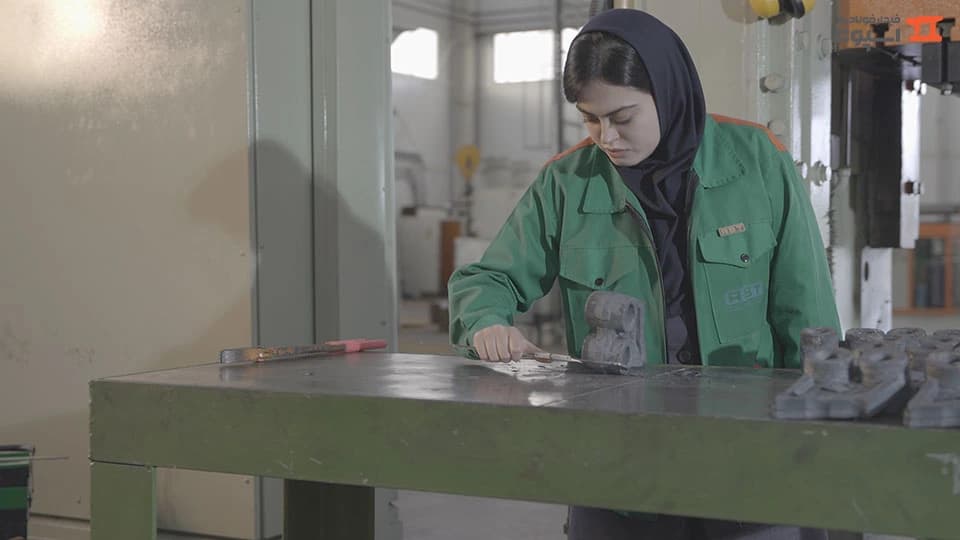
Types of forging by temperature
Forging can be divided by forming temperature into three main types: hot, cold and warm forging. Which is chosen depends on the metal, the shape of the part, the properties required and the production cost.
Hot forging
The metal is heated above its recrystallisation temperature — for steel, usually 900 to 1,200°C.
Advantages
- The metal is more formable
- Large and complex parts can be produced
- Less chance of cracking during deformation
- Less force needed for forming
Disadvantages
- Needs precise temperature control
- The metal surface may oxidise and scale
- Lower dimensional accuracy than cold forging
Applications
- Crankshafts, shafts and large gears
- The automotive and heavy machinery industries
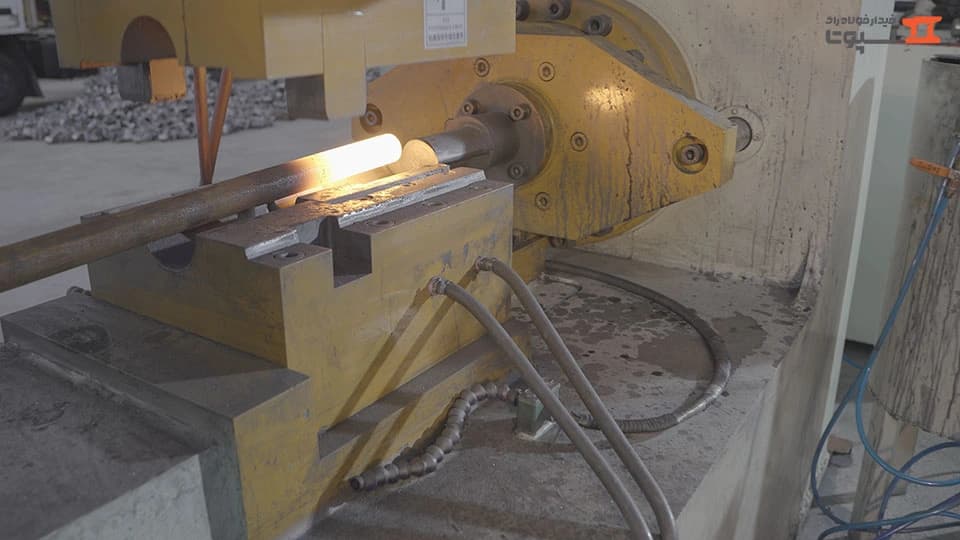
Cold forging
The metal is deformed at room temperature or slightly above (below its recrystallisation temperature). Because the metal is deformed in its harder state, the finished part is stronger.
Advantages
- Greater mechanical strength (thanks to work hardening)
- A smoother surface and better dimensional quality
- Less need for later machining
Disadvantages
- Needs very high forces
- Risk of cracking and failure of the metal
- Limited for very large or complex parts
Applications
- Bolts, nuts and small automotive parts
- Parts that need high dimensional and surface accuracy
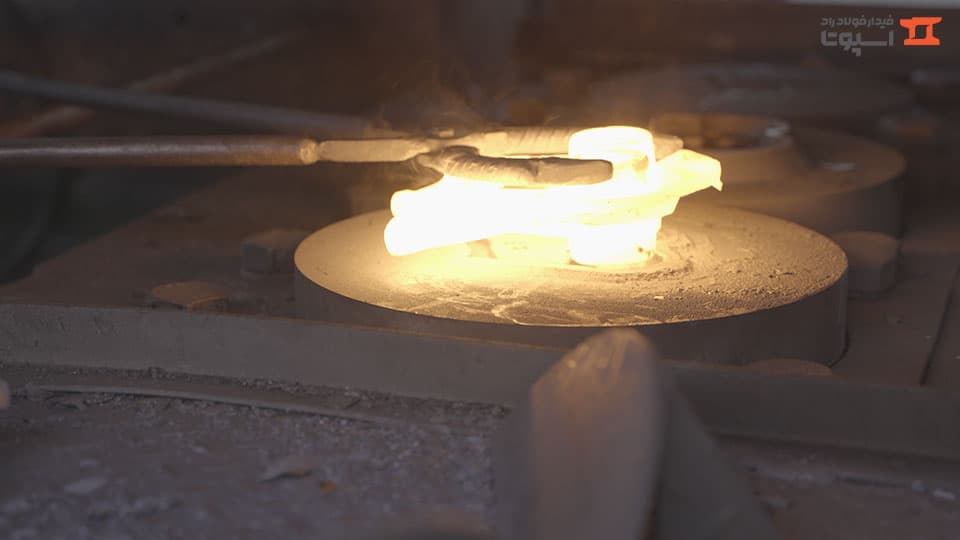
Warm forging
This method combines the other two. The metal is deformed at a temperature between room temperature and its recrystallisation temperature (about 600 to 800°C for steel).
Advantages
- Less force needed than cold forging
- Less surface oxidation than hot forging
- Better surface quality and dimensional accuracy than hot forging
- More complex parts are possible than with cold forging
Disadvantages
- Needs precise temperature control
- Extra heating equipment is required
Applications
- Automotive parts (gears, bearings)
- Parts that need high strength and good dimensional accuracy
Forging equipment and tools
Forging needs not only technical know-how but specialised tools and equipment. The choice of equipment depends on the size of the part, the metal, the forging method (hot or cold) and the production volume. The main equipment used in forging is:
- Furnaces
Furnaces heat the metal for hot or warm forging.
- Types: gas, electric and induction furnaces
- Requirements: they must heat the part evenly and allow precise temperature control.
2. Hammers
Hammers are the main tools for striking the metal.
- Hand hammer: used in traditional smithing.
- Mechanical or steam hammer: driven by a motor or steam and used for larger parts.
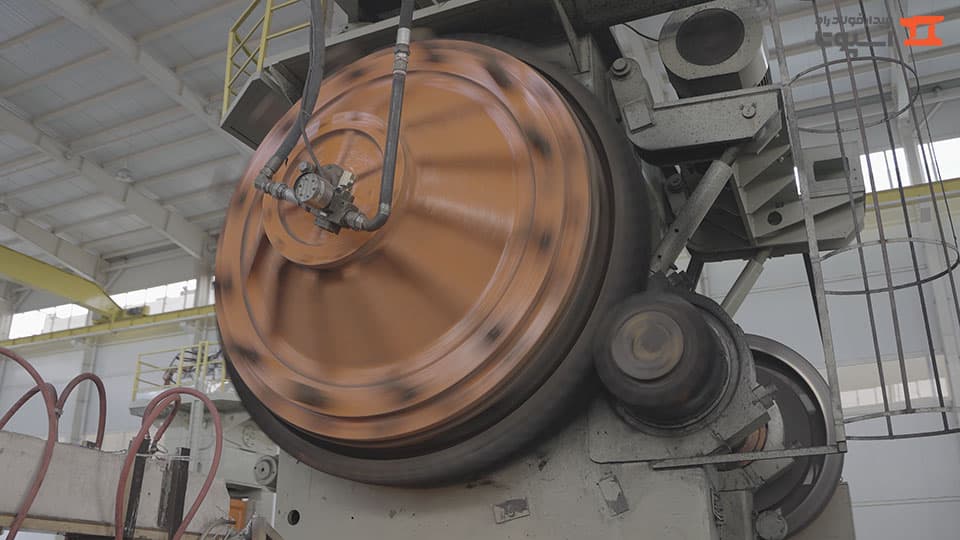
3. Presses
Presses apply a continuous, controlled force. Unlike a hammer, which strikes, a press applies a more even pressure.
- Mechanical press: suited to mass production of small and medium parts
- Hydraulic press: can produce very large, complex parts
- Isostatic and modern presses: used in advanced industries such as aerospace
4. Dies
Dies are a key element of forging: they define the final shape of the part.
- Open dies: for open-die forging and large parts
- Closed dies: for precise, complex parts
- Dies are usually made of hard tool steel to withstand high pressure and temperature.
5. Anvil
The hard surface the part rests on while hammer blows or press pressure are applied. Anvils must be very tough and stable.
6. Auxiliary equipment
- Handling tools and tongs: to hold the part during forging
- Cooling systems: to control temperature and protect the part
- Machine tools: for finishing operations such as machining and surface finishing
Materials used in forging
The choice of material matters a great deal in forging, because the part's mechanical properties, strength and final use depend on the metal. Materials are usually chosen for good formability, high strength and suitability for heat treatment. Here are the most important:
- Steel
Steel is the most widely used material in forging.
The main kinds are:
- Stainless steels: used in the food, medical and petrochemical industries for their corrosion resistance
- Carbon steels: for simple tools, shafts and automotive parts
- Alloy steels: for industrial uses and parts that must resist wear and heat
2. Aluminium and its alloys
- Uses: aircraft components, automotive parts and sports equipment — aluminium's lightness and corrosion resistance make it popular in transport and aerospace
- Advantages: low weight, high formability and resistance to corrosion
3. Copper and its alloys
Copper and alloys such as brass and bronze are forged for their high conductivity and good formability.
- Uses: electrical parts, fittings, pipes and decorative parts
4. Titanium
Titanium is used in advanced industries for its high strength-to-weight ratio and excellent corrosion resistance.
- Disadvantages: high cost and difficult to form
- Uses: aerospace, medicine (implants) and the chemical industry
5. Nickel alloys
Nickel alloys are used for special applications thanks to their excellent resistance to high temperatures and oxidation.
- Uses: turbine blades, jet engine parts, and the oil and gas industry
6. Other metals
- Magnesium: light but brittle; limited use in special parts
- Special alloys: for defence and nuclear energy
The forging process step by step
Forging is a multi-stage process, and every stage plays an important part in the quality and mechanical properties of the part. The main stages are:
1. Preparing the metal
- Cleaning the surface: removing contamination and surface oxides to prevent defects in the finished part.
- Cutting the stock: the raw material is cut to size according to the dimensions of the part.
2. Heating the metal (for hot forging)
- The metal is heated to the temperature needed for forming.
- The aim: to make it more formable and reduce the force needed to deform it.
- The right temperature depends on the metal (for example, 900 to 1,200°C for steel).
3. Forming
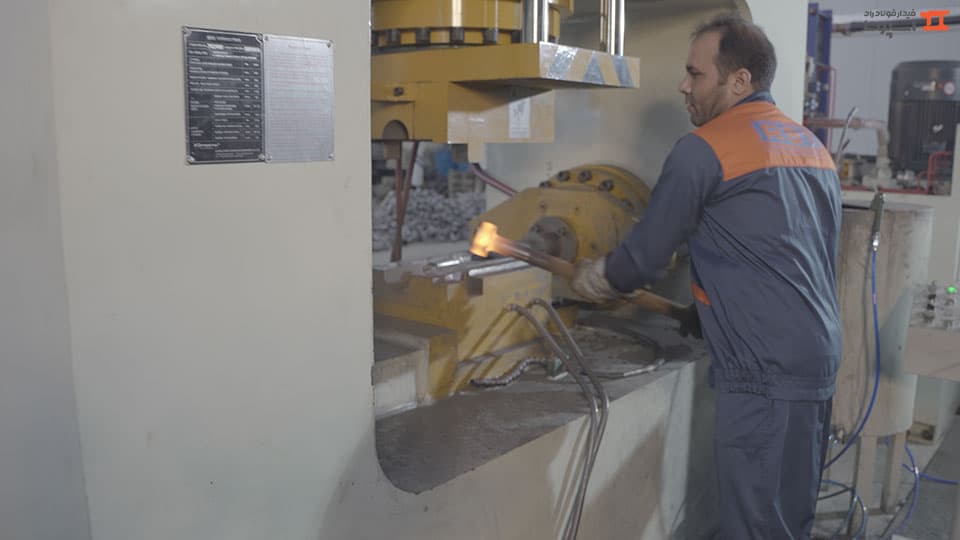
- Force and blows are applied to the metal with a hammer or press
- In open-die forging, the metal is deformed between open dies
- In closed-die forging, the metal takes the exact shape of the part inside the die
- Several blows or pressings may be needed to reach the final shape
4. Cooling and heat treatment
- Controlled cooling to prevent cracking or unwanted distortion
- Further heat treatment may be applied to improve the metal's mechanical properties (for example tempering or annealing)
5. Machining and surface finishing
- If greater dimensional accuracy is needed, the part is finished on machine tools
- Surface finishing can include sanding, grinding, chip removal or coating
6. Quality control and inspection
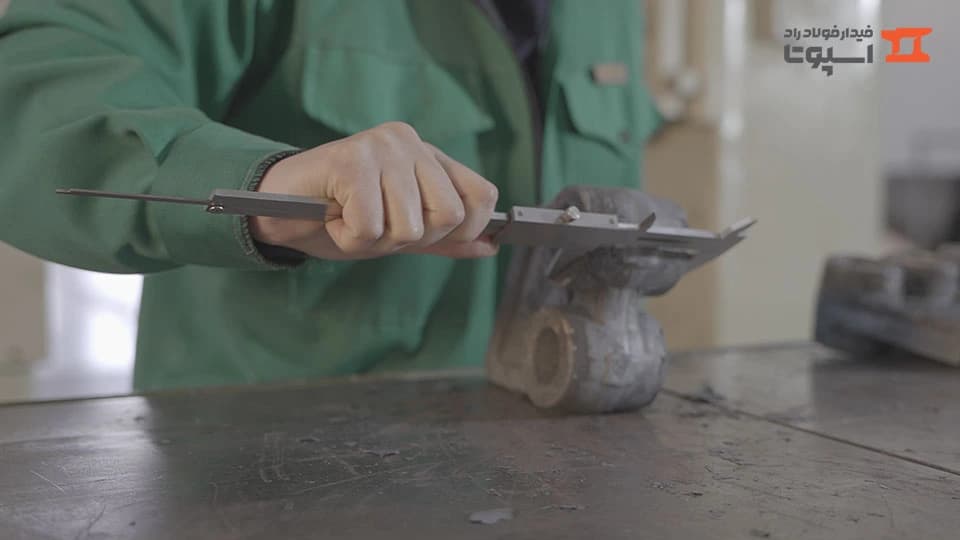
- Checking the part's dimensions, shape and mechanical properties
- Inspection includes non-destructive testing (NDT) such as ultrasonic, dye penetrant or radiographic testing
Advantages and disadvantages of forging
Advantages
1. Greater mechanical strength and hardness
- The grain microstructure of the metal is optimised during forging.
- Forged parts are more resistant to bending, tension and impact.
2. Fewer internal defects
- Porosity, voids and internal cracks are less common than with methods such as casting.
3. Optimised grain orientation
- The grain aligns with the direction of force in the part, increasing strength where it matters most.
4. Suited to parts that carry high loads
- Automotive, aircraft and industrial machinery parts under severe pressure or stress are usually forged.
5. Mass production with precise closed dies
- High dimensional accuracy and repeatability in large volumes
Disadvantages
1. Higher cost than casting for complex parts
- Forging dies and equipment are expensive.
2. Limits on the size and shape of parts
- Some shapes and very large parts cannot be forged.
3. Needs powerful equipment
- Hammers and presses must deliver great force, and their maintenance and energy costs are high.
4. Needs skill and technical knowledge
- The process — especially hand or semi-industrial forging — depends on the operator's experience and skill.
Forging compared with casting
| Feature | Forging | Casting |
|---|---|---|
| State of the material | Metal shaped in the solid state | Metal melted and moulded |
| Mechanical properties | Very tough, with dense grain | Lower strength; voids and porosity are possible |
| Dimensional accuracy | Needs final machining | Determined by the accuracy of the mould |
| Cost | Usually higher for complex parts | Cheaper for mass production and complex parts |
| Use | Parts that carry high loads | Complex parts in high volumes with lower loads |
Where forging is used
Thanks to its high strength, long life and good accuracy, forging is widely used in many demanding and advanced industries. Here are its most important fields of application:
1. Automotive
- Crankshafts, shafts, gears and wheel axles
- Parts that better withstand impact and stress
- Lower weight and longer vehicle life
2. Aerospace
- Turbine blades, structural components and jet engine parts
- Light alloys such as aluminium and titanium
- High strength at low weight, which is vital for flight safety
3. Defence
- Weapons, armour and blast-resistant parts
- Parts with high dimensional accuracy and mechanical strength
4. Energy, oil and gas
- Used in the oil, gas and petrochemical industries, where parts face high pressure and temperature
- Flanges, fittings and shafts that resist high pressure
5. Toolmaking and industrial machinery
- Gears, rolls, dies and machining equipment
- Longer service life and fewer equipment failures
6. Light industry and consumer goods
- Aluminium and brass for bicycle parts, household appliances and sports equipment
- Lighter, more durable parts
Common forging defects and how to fix them
For all its advantages, forging can leave defects in the finished part that affect its quality and durability. Knowing these defects and how to prevent or correct them is essential for producing quality parts.
1. Cracks
- Cause: excessive pressure, rapid cooling, the wrong temperature, or hard, brittle metal
- Fix: reduce the blow force or increase the number of blows
Solution
- Control the forging temperature
- Preheat the part in cold forging
2. Laps or folds
- Cause: poor metal flow in the die, or thin sections in some areas
- Fix: use several forming stages
3. Underfilling
- Cause: too little force or too low a metal temperature, or poor die design
- Fix: improve the die design
4. Dimensional change and warping
- Cause: uneven cooling or poorly distributed force
- Fix: design with shrinkage allowed for
Solution
- Even cooling
- Suitable fixtures and clamps
- A design that allows for shrinkage
5. Surface oxidation and scaling
- Cause: high heat in hot forging and contact with air
- Fix: finish the surface after forging
Solution
- Use a protective atmosphere or hot oil
New technologies in forging
As science and technology advance, forging has modernised too, with advanced equipment and methods that raise quality, accuracy and productivity. Here are the most important new technologies:
Isothermal and isostatic forging
- The metal is shaped under even pressure from all directions at a controlled temperature
Advantages
- Fewer internal defects
- A high-quality, uniform microstructure
- Suited to complex and large parts
Precision (net-shape) forging
- Very precise dies produce parts with dimensions close to the finished product.
Advantages
- Less need for final machining
- Saves time and material
- Greater dimensional accuracy
Numerical simulation and die design software
- Software such as finite element analysis (FEA) predicts metal flow and the distribution of force and temperature during forging.
Advantages
- Fewer errors and less trial and error
- Optimised dies and forging stages
- Less material waste
Artificial intelligence and Industry 4.0 in forging
- Monitoring and controlling the process with sensors, smart algorithms and data analysis
Advantages
- Precise control of temperature and pressure
- Defects predicted and quality improved
- Higher productivity and lower costs
Combined and hybrid forging
- Forging combined with metal 3D printing or rolling to produce complex parts
Advantages
- Parts with complex geometry and high mechanical properties
- Less weight and less material used
The future of forging in industry
Despite its thousands of years of history, forging still plays an important part in advanced industry, and combined with new and digital technologies it has a bright future.
1. Sustainable production and lower energy use
- High-efficiency equipment and heat recovery
- Less material waste and use of natural resources
- Forging combined with cheaper, greener processes
2. Combining with 3D printing and hybrid manufacturing
- Hybrid parts with complex shapes and high mechanical properties
- Lighter parts and less material
- Special parts for aerospace, medicine and energy
3. Smart manufacturing and Industry 4.0
- Sensors, robots and AI algorithms to monitor and control the process
- Predicting defects and optimising the forging stages
- Higher productivity and quality without direct operator intervention
4. Advanced materials and alloys
- Parts with unique mechanical properties
- Light alloys that resist heat and corrosion
- Special steels, titanium and nickel alloys developed for sensitive applications
5. Its role in the industries of the future
- Aerospace: jet engine parts and turbine blades with high strength and low weight
- Automotive: light, tough parts that use less energy
- Renewable energy: turbines and high-pressure equipment
- Medicine: implants and precision instruments
Conclusion
Forging, or smithing, is one of the oldest and at the same time most vital metal-forming processes, used from thousands of years ago to the present day in both traditional and advanced industries.
Because forging deforms metal without fully melting it, the mechanical and structural properties of parts are preserved or improved. This has given forged parts a special place in demanding, high-stress industries such as automotive, aerospace, energy and defence.
The key points covered in this article are:
- Types of process: hand, power, open-die, closed-die, extrusion and precision forging
- Temperature ranges: hot, cold and warm forging
- Materials: steel, aluminium, copper, brass, titanium and special alloys
- Advantages: high strength, fewer internal defects, optimised grain, suited to heavy loads
- Disadvantages: higher cost, limits on part size and shape, the need for powerful equipment
- New technologies: isostatic forging, precision forging, numerical simulation, smart manufacturing and hybrid forging with 3D printing
With all this in mind, forging is not just a traditional process but the backbone of modern industrial production. The choice between forging and other methods such as casting or rolling should be based on the part, the properties required and the production volume.
In the end, forging is a strategic process that combines traditional experience with new technology to produce strong, precise, long-lasting parts — and it will continue to play an important part in the future of industry and advanced technology.
Frequently asked questions
What is forging?+
Forging, or smithing, is a process in which metal is shaped by pressure or blows. It can be done at high temperature (hot forging) or at room temperature (cold forging).
What is the difference between hot and cold forging?+
In hot forging the metal is heated to a high temperature and is easier to shape, but the heat must be controlled. In cold forging the metal is shaped at room temperature, which increases its strength and hardness, but shaping is harder.
What materials are used in forging?+
Steel, aluminium, copper, brass and some special alloys are commonly forged. The choice depends on the application and the properties required.
What kinds of parts is forging suited to?+
Parts that need high strength, carry heavy loads and must last a long time, such as shafts, gears, automotive parts, aircraft parts and industrial machinery.
Is forging only for heavy metals?+
No. Light metals such as aluminium and brass are forged too, especially where high mechanical strength and dimensional accuracy matter.