Choosing the right production method for industrial parts directly affects their strength, durability, dimensional accuracy and production cost. The two main ways of making metal parts are forging and casting, and each has its own advantages, limitations and applications.
Forging and its industrial applications
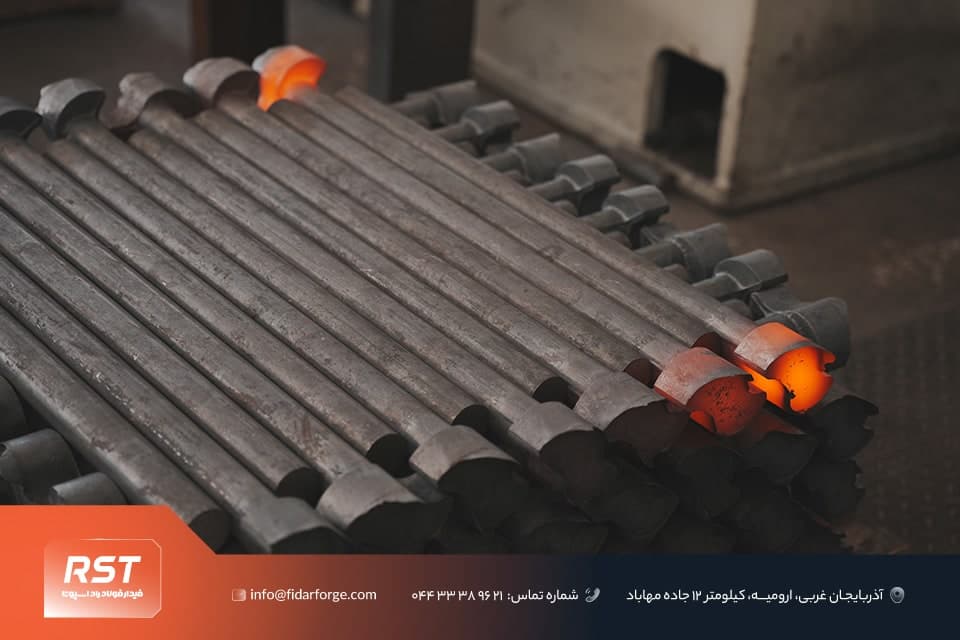
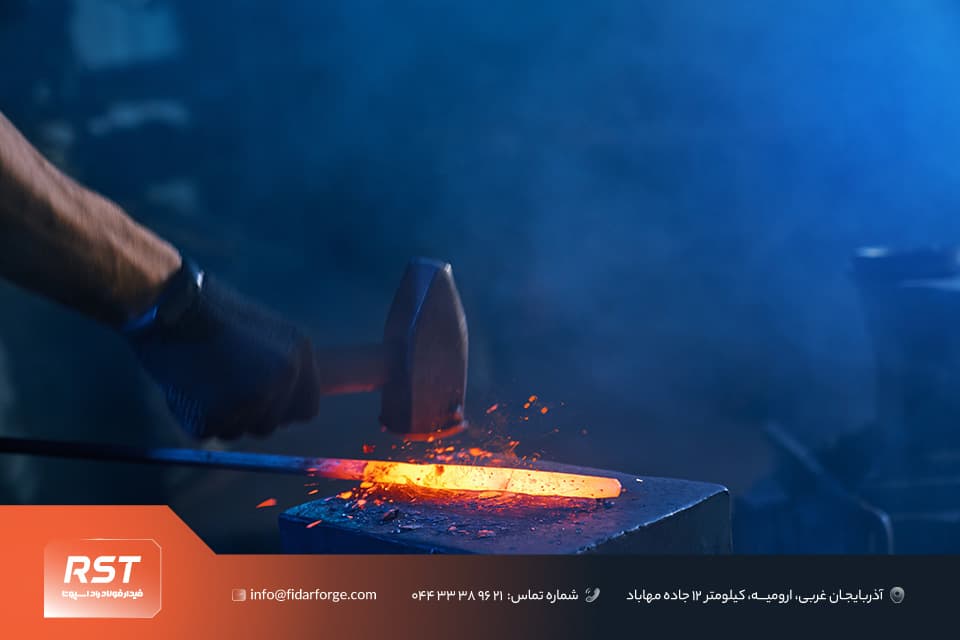
Forging is a process in which metal is turned into the desired part by applying force and deforming it plastically. It is usually done with mechanical hammers, hydraulic presses or CNC machines. To learn more about the different forging methods, see our article on the types of forging.
Key features of forging
- Higher strength and toughness thanks to the grain flow of the metal
- Less risk of cracks, voids and structural weakness
- Suited to parts that carry heavy mechanical loads
Industrial applications
- Shafts, crankshafts and gears in vehicles
- Aerospace and turbine components
- Heavy equipment and industrial machinery
“Further reading: forging compared with other methods”
Casting and its use for shaped parts
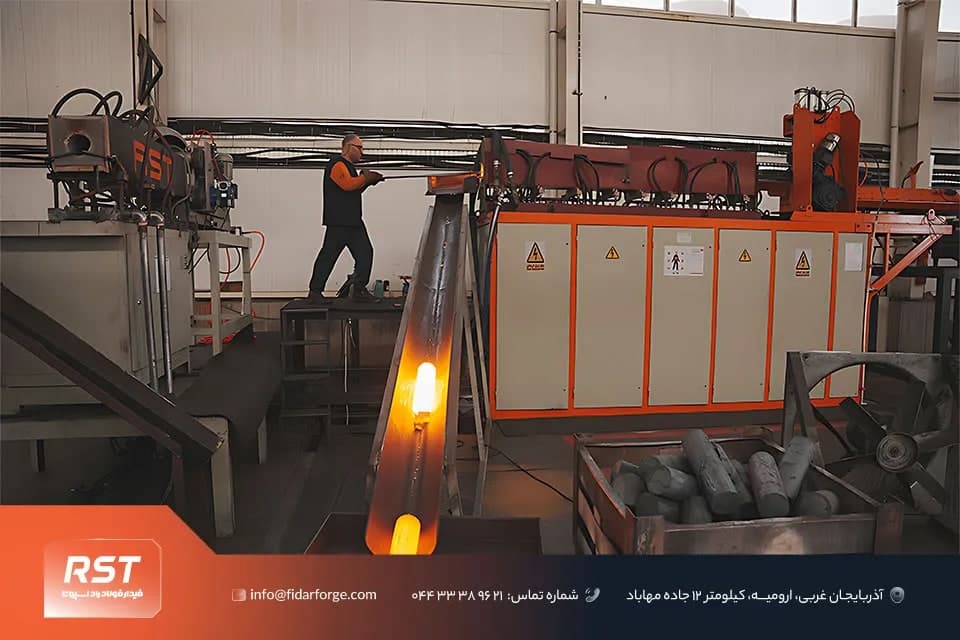
Casting is a process in which molten metal is poured into a mould of a given shape to produce a part. It makes it possible to produce complex parts with free-form geometry.
Key features of casting:
- Can produce parts with complex shapes and fine detail
- Suited to mass production
- Some limits on strength and durability compared with forging
Industrial applications:
- Engine housings and cylinder blocks
- Pump parts and industrial valves
- Large, complex parts for the marine and machine-building industries
How the forging and casting processes differ
| Feature | Forging | Casting |
|---|---|---|
| State of the material | Solid metal shaped by force | Molten metal poured into a mould |
| Dimensional accuracy | Medium to high; less finish machining needed | Needs machining after moulding for high accuracy |
| Strength and toughness | Very high, thanks to grain flow | Relatively lower; voids and cracks are possible |
| Complex shapes | More limited; simple to medium parts | Very good; complex parts and fine detail |
| Production cost | Usually higher, especially for small, complex parts | Lower for complex and large parts |
| Production speed | Slower, because of forming and machining steps | Faster for mass production of complex parts |
Dimensional accuracy and part quality in forging and casting
The production method you choose directly affects the dimensional accuracy, quality and durability of metal parts. Forging and casting each have their own limits and advantages, which should be weighed against what the part will be used for.
Dimensional accuracy in forging and casting
Forging: dimensional accuracy is medium to high, and many forged parts need less finish machining. Grain flow and the compaction of the metal give forged parts greater stability and strength. Casting: dimensional accuracy is lower, and complex parts usually need finish machining. Shrinkage as the metal cools and the chance of internal voids can reduce accuracy.
How casting affects leaks, voids and durability
Cast parts may contain voids, fine cracks and internal leak paths that affect their durability and mechanical performance. These problems are seen more often with high-melting-point metals and complex parts. Forged parts, by contrast, resist cracking and fatigue better because the metal is denser and its grain is realigned.
Quality problems in casting
- Uneven material and internal voids
- Lower surface hardness than forging
- Finish machining needed to reach high dimensional accuracy
- Risk of defects caused by shrinkage and mould temperature
The drawbacks of forging: design limits and complexity
- Forging is limited for very complex shapes or fine detail.
- Forging dies and tooling are expensive, especially for small or complex parts.
- Some parts need finish machining or secondary processes to reach their final shape.
Advantages of forging over casting
- Higher strength and toughness thanks to grain flow
- Greater durability and resistance to fatigue and impact
- Less chance of internal voids and cracks
- Longer life for parts under severe mechanical loads
Advantages of casting over forging
- Can produce parts with very complex shapes and fine detail
- Fast mass production
- Lower cost than forging for large, complex parts
- Suited to parts where very high strength is not critical
“Further reading: why forging matters across industries”
The cost of forging vs. casting: an economic view
- Forging: the up-front cost of dies and tooling is high, but it pays off for high-volume, long-life parts.
- Casting: lower up-front mould cost and fast production, well suited to large and complex parts, but extra repair and machining may be needed.
- The economics: the choice should be based on what the part is for, how many are needed and how long it must last.
Where forging and casting are used
The production process you choose directly affects how a part can be used and how it performs. Each method has its own strengths, which need to be weighed for each industry.
Forging in vehicles, aerospace and heavy machinery
- Vehicles: shafts, crankshafts, gears and other parts under heavy mechanical load.
- Aerospace: engine components and high-pressure parts, where durability and fatigue resistance matter most.
- Heavy machinery: industrial parts and equipment that take heavy and impact loads.
Casting for complex, shaped parts
- Suited to parts with complex geometry and fine detail that are hard to forge.
- Used for engine housings, cylinder blocks, and marine and industrial parts.
- Allows mass production with standard moulds and lower cost for large parts.
When to choose forging and when to choose casting
- Forging: when strength, durability and fatigue resistance matter and the part's shape is simple to moderately complex.
- Casting: when a complex shape, fine detail and mass production are needed and exceptional strength is not critical.
Practical tips for engineers and buyers
Choosing the method by material and alloy
- Different alloys behave differently in forging and casting.
- Metals with high formability are better suited to forging.
- Metals with low melting points and highly complex geometry are better suited to casting.
Design and size limits in forging and casting
- Forging: limited for complex and small parts; needs dedicated tooling and dies
- Casting: fewer limits, but finish machining is needed for high accuracy
Tips for buying quality forged and cast parts
- Check the brand and the quality of the forged or cast parts
- Choose OEM parts or a reputable aftermarket brand
- Pay attention to industry standards and the part's final use
Forging and casting compared in full
- Strength and fatigue resistance: thanks to grain flow and denser metal, forged parts resist fatigue and impact far better. Cast parts usually have moderate strength and may contain voids or internal cracks in places.
- Dimensional accuracy and surface quality: forged parts usually have medium to high dimensional accuracy and need less finish machining. Cast parts are less accurate and usually need finish machining to reach high accuracy.
- Production cost: forging costs more for small, complex parts but is economical for high-volume industrial parts. Casting has lower up-front mould and tooling costs and is cost-effective for large, complex parts.
- Production speed: forging usually takes longer because forming and machining take longer. Casting is faster for mass-producing large, complex parts.
- Complex shapes: forging has limits with very complex parts or fine detail, while casting can produce free-form parts with fine detail.
- Industrial use: forging is used mostly in the automotive, aerospace and heavy-machinery industries, where durability and strength are vital. Casting is better suited to industrial parts, engines, cylinder blocks and complex parts where shape and geometry matter.
Summary
Forging and casting each have their own advantages, limitations and applications. Thanks to grain flow, dense metal and high strength, forging suits parts under severe mechanical load, fatigue or impact — such as vehicle shafts, crankshafts and gears, aerospace components and heavy machinery.
Casting, on the other hand, is used where geometry matters and mass production is the aim, thanks to its ability to produce complex parts with fine detail at high speed. Differences in dimensional accuracy, surface quality, production cost and design limits mean the choice between forging and casting depends entirely on the part and its final use.
For engineers, designers and buyers of industrial parts, understanding these differences matters. Weighing the pros and cons of each method, the design limits, the material and alloy, and the production cost shows which process suits each part best.
Fidar Forge Spoota offers expert advice and quality forged parts to help industries make the best choice — parts that are durable, strong and of high quality, and that raise the efficiency of your production.
Frequently asked questions
Are forged parts always stronger than cast parts?+
Forged parts are usually stronger and tougher, because forging aligns the grain and compacts the metal. Depending on the alloy and the design, though, some complex parts or thin sections may not differ much from castings.
What do forged and cast parts cost to make and repair?+
Forging has higher up-front die and tooling costs, but it is economical for high-volume, long-life parts. Casting has lower mould costs and faster production, but may need finish machining or minor repairs.
Which method is better for critical, complex parts?+
For parts that are sensitive to load and fatigue, forging is the best choice because it is stronger and more durable. For complex parts with fine detail, casting is better suited, as it can produce free-form shapes and large parts with intricate detail.