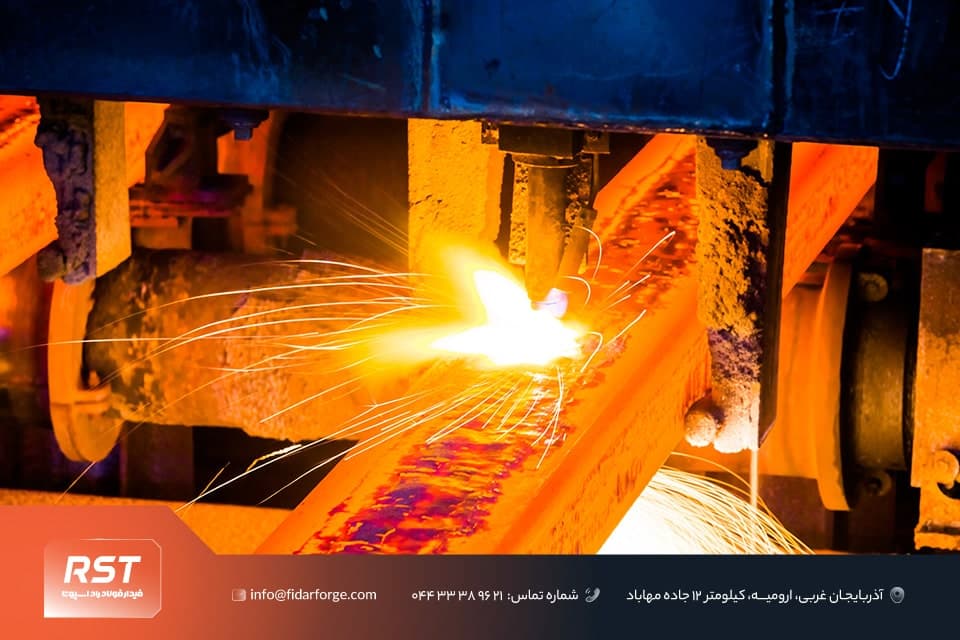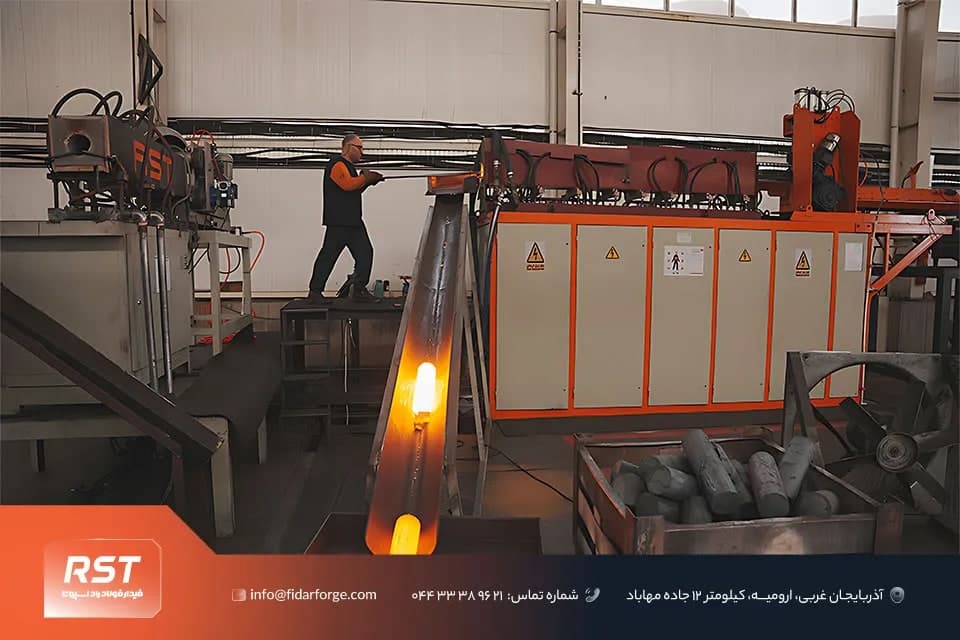
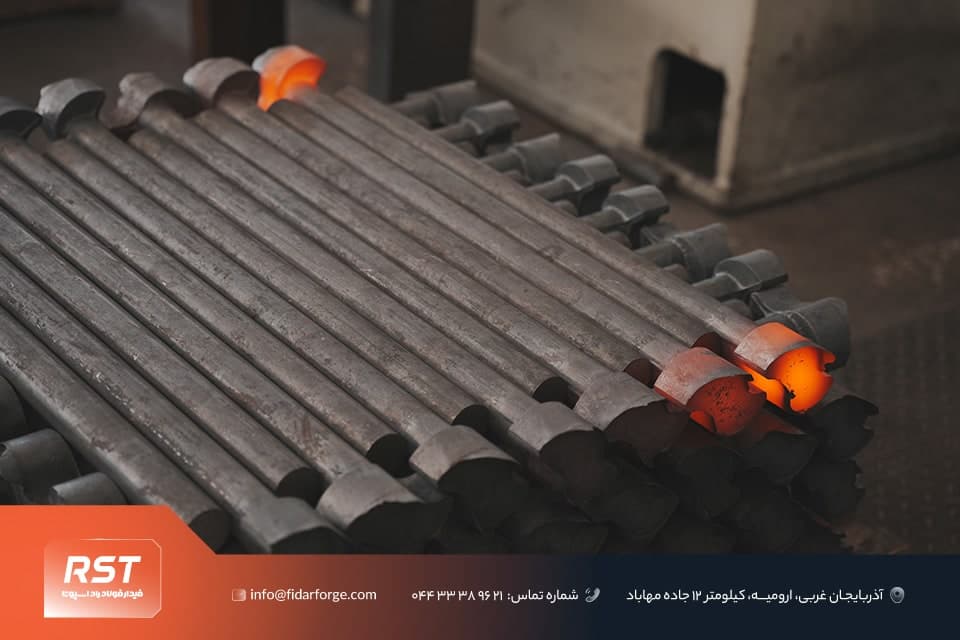
Forging is one of the oldest and at the same time most important processes for making metal parts. The metal is deformed under high pressure, sometimes at high temperature, until it takes the shape required. It can be done with a hand hammer, a mechanical hammer or a hydraulic press, and because of its particular effects on the internal structure of the metal it is widely used in industry.
Why forging matters in industry
- High mechanical strength
In forging, the grain of the metal follows the shape of the part. This grain orientation raises tensile strength, hardness and impact resistance. Compared with castings or machined parts, forging produces far tougher parts with a longer service life.
- Resistance to fatigue and impact
Parts under constant load and stress, such as shafts, gears and crankshafts, need high resistance to fatigue and sudden failure. By creating a dense grain structure, forging increases this resistance dramatically.
- Fewer internal defects
Forging closes up the porosity, voids and fine cracks that are common in casting and some other methods. The result is safer, more durable parts.
- Suited to critical, highly stressed parts
Forging is the best choice for parts under high pressure, impact or cyclic loads. That is why it is used so widely in aerospace, automotive, oil and gas, and heavy industrial equipment.
- Suited to medium and high production volumes
Because standard parts can be produced economically in large numbers, forging is a good fit for industrial production.
To learn more, read our article on why forging matters across industries.
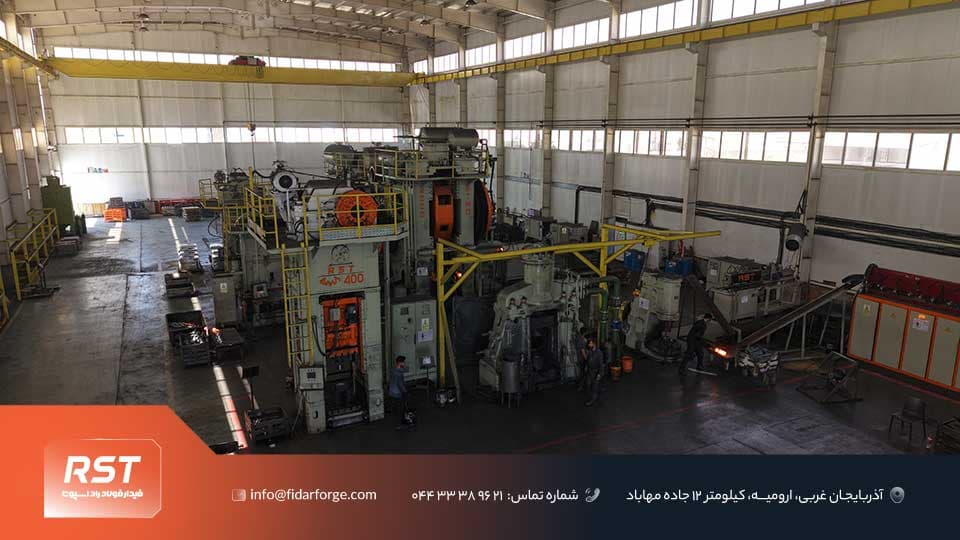
An overview of the ways metal parts are made
There are several ways of making metal parts, each with its own features, limits and applications. They fall into two broad groups:
Forming processes
In these methods the metal is reshaped without removing or adding material:
- Forging: high pressure applied to the metal to create a three-dimensional shape with a dense grain structure
- Rolling: reducing thickness and increasing length by passing the metal between rolls; suited to sheet and sections
- Extrusion: pushing the metal through a die to produce long, uniform cross-sections
The main advantage of these methods is better mechanical properties and fewer internal defects, but they are limited for complex shapes or require a constant cross-section.
Subtractive and casting processes
These processes either remove material from the workpiece or form the part from the molten state:
- Casting: molten metal is poured into a mould and takes its shape. Suited to complex shapes and bulky parts, but porosity and shrinkage defects are possible.
- Machining: material is cut away to reach a precise shape. Very high dimensional accuracy, but a lot of material is wasted and costs are high.
- Powder metallurgy: metal powder is compacted and then sintered. Suited to small, precise parts, but limited in strength and load-bearing capacity.
What is forging?
Forging is a process in which metal is deformed under intense pressure until it reaches the desired shape. It can be done at room temperature or at high temperature, using tools such as hammers, mechanical presses or hydraulic presses.
Why forging matters in industry
- Higher tensile strength: a dense, oriented grain structure increases the part's tensile strength.
- High resistance to fatigue and impact: suited to parts under constant load and shock, such as shafts and gears.
- Fewer internal defects: porosity and fine cracks are reduced, making the part safer and more durable.
- Critical parts: vital components in aerospace, automotive and oil and gas are usually forged.
- Economical at medium to high volumes: compared with machining and casting, for large, high-quality parts.
Materials used in forging
The material is chosen according to the mechanical properties required, the working environment, the operating temperature and the shape of the part:
- Carbon and alloy steel: the most common material; high strength; suited to crankshafts, shafts and gears
- Aluminium and light alloys: light and corrosion-resistant; aerospace and automotive
- Copper, brass and bronze: high conductivity and good formability; industrial and electrical parts
- Titanium and superalloys: resistant to heat and corrosion; aerospace and advanced industries
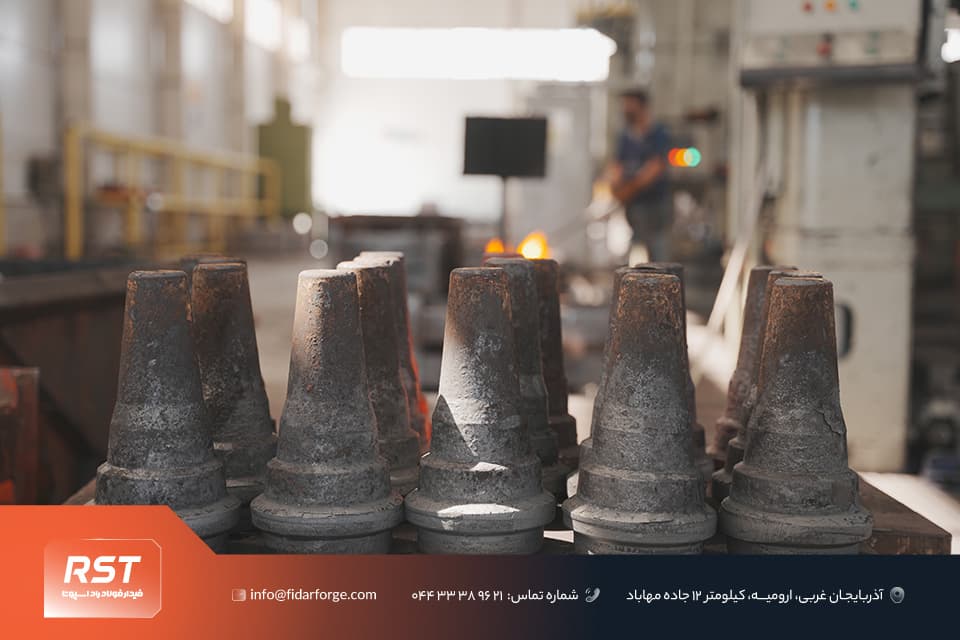
Types of forging
This section describes the types of forging:
| Type of forging | Temperature | Advantages | Disadvantages | Industrial use |
|---|---|---|---|---|
| Hot forging | Above the recrystallisation temperature | Easy forming, less force, suited to large parts | Lower dimensional accuracy; needs heat-resistant equipment | Shafts, crankshafts, aerospace and heavy industrial parts |
| Cold forging | Room temperature | High dimensional accuracy, excellent surface finish | Needs more force; limited for large parts | Bolts, nuts, small precision parts for vehicles and tools |
| Warm forging | Between room and recrystallisation temperature | Combines the advantages of hot and cold; less force than cold | Needs precise temperature control and special equipment | Parts with moderate accuracy and good mechanical properties; special industrial sections |
Mechanical properties in detail
To understand the advantages of forging fully, it helps to compare the mechanical properties produced by each process. The table below gives typical figures for a widely used alloy steel:
It shows that forging gives higher strength, fatigue resistance and toughness than casting and machining.
| Process | Tensile strength (MPa) | Fatigue strength (MPa) | Hardness (HB) | Impact toughness (J) |
|---|---|---|---|---|
| Hot forging | 650–950 | 200–300 | 180–250 | 40–70 |
| Cold forging | 600–850 | 180–250 | 200–270 | 35–60 |
| Casting | 350–500 | 80–120 | 120–180 | 10–30 |
| Machining from cast steel | 350–500 | 80–120 | 120–180 | 10–30 |
Design tips for forging
- Changes of section and radii
- Avoid sudden changes of section, which raise internal stress and cause cracks.
- Use suitable radii at corners to spread stress.
- Maximum thickness and length
- Very large or thick parts may need multi-stage forging.
- Grain orientation
- Design the part so that the metal's flow lines follow the load paths, to increase resistance to load and impact.
- Finishing
- Most parts need machining after forging for final accuracy and surface finish.
- Temperature and speed control
- Forging temperature and forming speed directly affect the grain structure, hardness and toughness of the part.
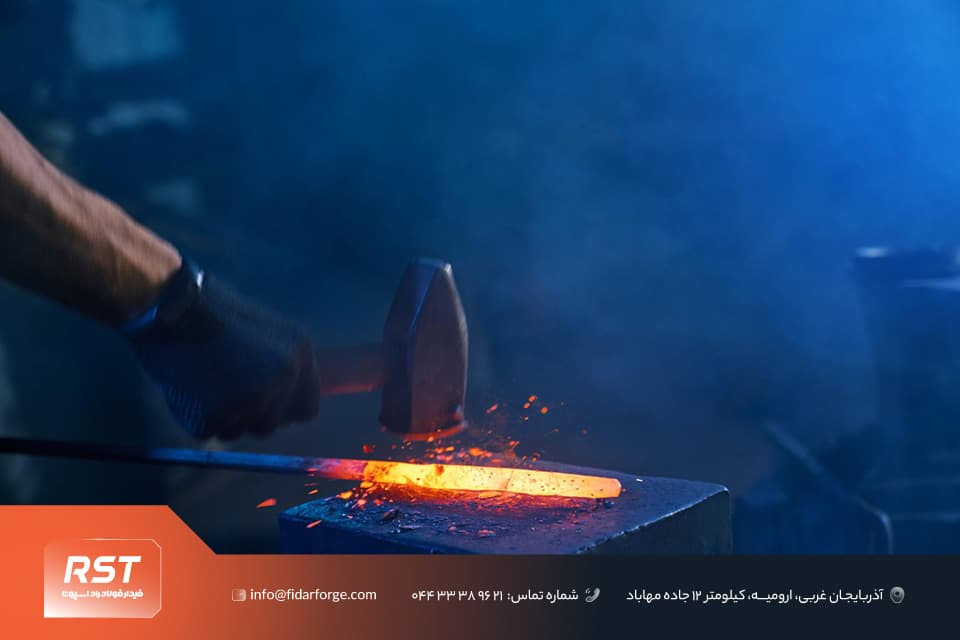
Other ways of making metal parts
In industry, metal parts can be produced in many ways, each with its own advantages, limits and applications. The right method depends on the shape of the part, the mechanical properties required, the production volume and the budget. The main methods fall into two broad groups:
- Forming methods: such as forging, rolling and extrusion, where the metal is deformed into the desired shape.
- Subtractive and casting methods: such as casting, machining and powder metallurgy, where material is removed or the part is formed from the molten state.
Casting
In casting, molten metal is poured into a mould and takes the shape of the part as it solidifies.
Advantages
- Very complex parts with internal detail such as channels and cavities
- Suited to large, bulky parts
- Economical for low or medium volumes
- A wide range of alloys can be used
Disadvantages
- The random grain structure is weaker.
- Porosity, cracks and shrinkage defects are common.
- Moderate dimensional accuracy; finish machining is often needed.
Industrial applications
- Engine housings and industrial valve bodies
- Large high-pressure parts and mining equipment
“Further reading: forging vs. casting — the processes, pros and cons compared”
Machining
Machining is a process in which material is removed from the workpiece to create the final shape.
Advantages
- The highest dimensional accuracy and surface finish
- Suited to precision parts and industrial tooling
- Very flexible for custom shapes
Disadvantages
- High material waste (30–60% of the stock)
- Slow and costly at high volumes
- Little effect on the metal's internal mechanical properties
Industrial applications
- Finishing semi-finished forged parts
- Precision tools, dies and complex profiles
Rolling
Rolling is a process in which metal is passed between rolls to reduce its thickness and increase its length.
Advantages
- Better grain orientation and mechanical properties
- Higher yield strength
- Suited to producing sheet, sections and bar
Disadvantages
- Limited to simple shapes with a uniform cross-section
- Complex three-dimensional parts cannot be produced
Industrial applications
- Steel sheet, beams, and structural and industrial sections
Extrusion
In extrusion, metal is forced through a die under pressure to create a uniform cross-section.
Advantages
- Good dimensional accuracy
- Complex long cross-sections
- Less material waste than machining
Disadvantages
- Limited to uniform long cross-sections
- Best suited to softer metals such as aluminium
Industrial applications
- Aluminium sections for aerospace, construction and industry
- Industrial tubes and pipes
Powder metallurgy
Powder metallurgy is a process in which metal powder is compacted and then sintered to form the part.
Advantages
- Complex shapes with high accuracy
- Very little material waste
- Suited to small, precise parts
Disadvantages
- Limited mechanical properties for some alloys
- Lower load and impact capacity than forging
Industrial applications
- Small electrical and industrial parts
- Gears and precision tool parts
- The automotive and electronics industries
Forging compared with casting
Forging and casting are the two most common ways of making metal parts, but they differ greatly in the nature of the process, the mechanical properties they produce and their limitations. The differences fall into three main areas.
Mechanical strength
Forging
- Dense, oriented grain structure: in forging, the grain flows with the deformation, increasing tensile strength, impact resistance and fatigue resistance.
- Greater toughness: forged parts are less prone to sudden failure and can carry high cyclic loads.
Casting
- Random grain structure: in casting, the metal takes the shape of the mould as it solidifies and the grains grow randomly.
- Likely porosity and internal defects: voids, shrinkage cracks and porosity reduce tensile strength and toughness.
- Lower fatigue resistance: cast parts fatigue faster under cyclic stress.
In short: for strength and toughness, forging is clearly superior and the better choice for parts under dynamic and critical loads.
Build quality and porosity
| Criterion | Forging | Casting |
|---|---|---|
| Porosity | Practically none; dense structure | Voids and shrinkage cracks may be present. |
| Uniformity of structure | Very uniform; oriented grain | Random, less dense grain |
| Finish machining | Sometimes, for final accuracy | Often needed for accuracy and surface finish |
| Complex parts | Limited; critical 3D parts | Very good; complex internal shapes possible |
Note: forging produces tougher, longer-lasting parts, while casting makes it possible to produce complex parts with difficult geometry.
Production cost and volume
Forging
- High up-front die cost
- Economical at medium to high volumes
- Stronger, longer-lasting parts, and so higher added value
Casting
- Economical for low volumes or complex parts
- Cheaper moulds and fast production
- Lower strength and mechanical properties, so not recommended for critical parts
Forging compared with rolling and extrusion
Forming limitations
- Forging: can produce complex three-dimensional parts for critical stress and load
- Rolling: limited to long, simple sections such as sheet, profiles and beams
- Extrusion: limited to uniform long sections; suited to industrial profiles
Industrial applications of each method
| Method | Industrial applications |
|---|---|
| Forging | Crankshafts, connecting rods, gears, automotive and aerospace shafts |
| Rolling | Steel sheet, beams, and structural and industrial sections |
| Extrusion | Aluminium sections, industrial pipe and tube |
Design flexibility
- Forging: very high; complex three-dimensional shapes are possible and the metal's flow lines can be controlled
- Rolling and extrusion: limited; they produce only long, simple sections
In short: forging is the first choice for critical, load-bearing parts; rolling and extrusion suit long parts in high volumes.
Advantages and disadvantages of forging compared with other methods
Advantages of forging
- High strength and durability: dense, oriented grain with excellent resistance to fatigue and impact
- Less porosity and fewer internal defects: parts practically free of voids and cracks
- Critical parts: shafts, gears, crankshafts and high-pressure components
- Economical at medium to high volumes: more added value than casting and machining
Disadvantages and limitations
- High up-front die cost
- Needs heavy, specialised equipment
- Limited for very complex and hollow shapes
- Finish machining needed for high dimensional accuracy
When is forging the best choice?
- Parts under high load and impact
- Sensitive, critical parts where sudden failure is dangerous.
- Medium to high volumes, where forging stays economical.
- Parts that need high strength, toughness and fatigue resistance.
The industrial verdict: forging is the best option for highly stressed, critical, long-life parts, while methods such as casting and machining are used more for complex or precise parts that carry less load.
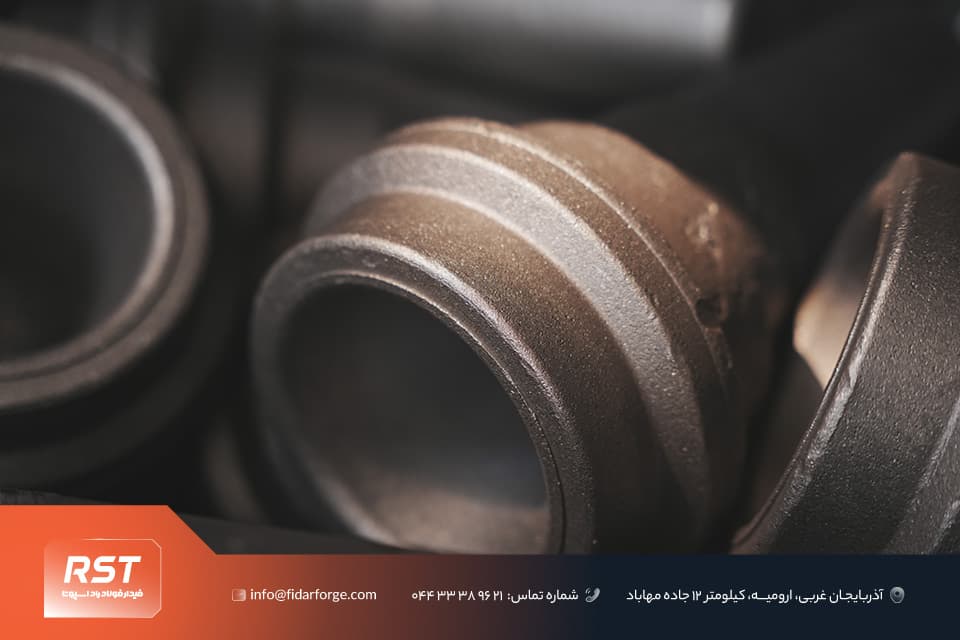
Industrial applications of forging
Thanks to its high strength, toughness, impact resistance and long life, forging is widely used in demanding industries and for critical parts. Below are the most important industries and examples of forged parts.
The automotive industry
Forging matters a great deal in the automotive industry, which needs parts that stand up to load and fatigue.
Examples
- Crankshafts and connecting rods: carry the engine's dynamic loads with less fatigue failure
- Gearbox and axle gears: high strength and long life
- Suspension parts: withstand impact and high stress
- Wheels and steering rods: mechanical precision and wear resistance
The benefit: forged parts extend the life of the engine and drivetrain and make vehicles safer.
Oil and gas
In these industries, parts face high pressure, high temperature and corrosive environments, which makes forging ideal.
Examples
- High-pressure flanges and valves: resist cracking and leaks
- Pump and compressor shafts: carry dynamic loads in corrosive environments
- Fittings and rotors: keep their strength over long periods in critical conditions
The benefit: forging makes oil and gas equipment safer and reduces the risk of failure.
Aerospace
In aerospace, parts must be light, withstand high heat and pressure, and last a long time.
Examples
- Jet engine parts: such as rotors, shafts and fan blades in forged superalloys
- Critical aircraft structures: frames and stress-bearing sections
- Flight control gears: carry high loads and resist fatigue
The benefit: forging superalloys makes it possible to produce light, strong parts, which aerospace depends on.
Heavy industrial equipment
In heavy industry and mining, parts must withstand very high loads and severe impacts.
Examples
- Gears and shafts in mining and drilling machinery
- Crane and press components
- Industrial bushings and axles
The benefit: forging produces long-lasting parts that resist impact and fatigue, which is vital in heavy equipment.
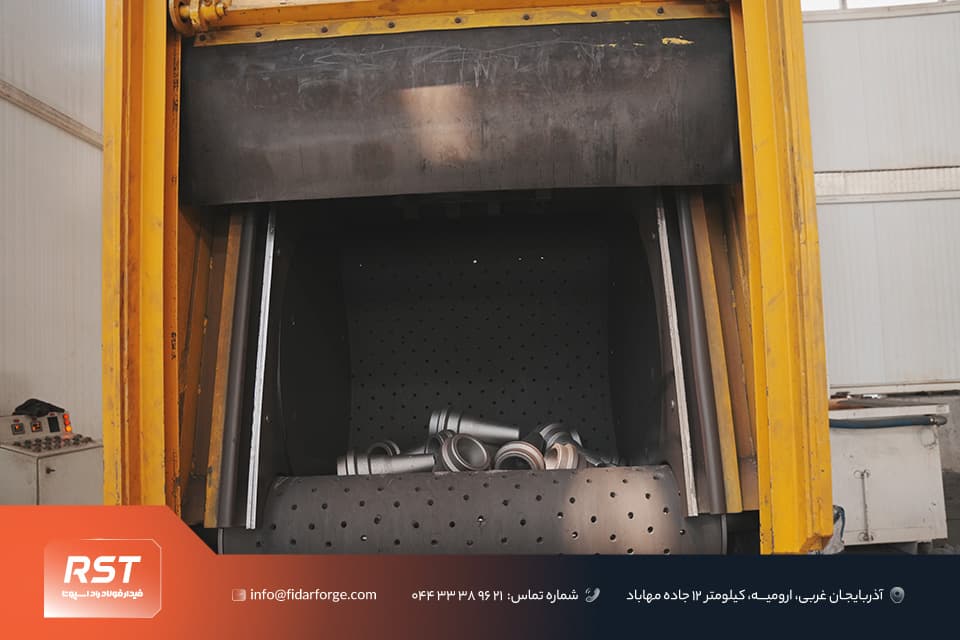
Summary
Forging stands out across industries for its combination of high strength and toughness, long life and lower risk of sudden failure. In the process, the metal's grain is oriented with the deformation, dramatically increasing the part's tensile, fatigue and impact strength. Forged parts are also practically free of porosity and internal defects, which is essential for critical applications.
Economically, too, forging is cost-effective at medium to high volumes and makes it possible to produce complex three-dimensional parts with great design flexibility and controlled metal flow. It works with a wide range of materials, such as steel, aluminium, titanium, copper and superalloys, and produces optimal mechanical properties.
That is why forging is the best choice when a part will face load, impact or severe dynamic conditions, and long life and high mechanical properties matter.
Frequently asked questions
How does forging differ from casting?+
Forging and casting are both ways of making metal parts, but they differ mainly in the internal structure and mechanical properties of the part. In forging, the metal's grain is oriented and compacted, increasing strength, toughness and resistance to impact and fatigue. In casting, the metal takes shape in the mould as it solidifies and the grain is random, which can lead to porosity and lower strength. In short, forging suits highly stressed, critical parts, while casting suits complex parts with difficult geometry.
Are forged parts always stronger?+
Generally, yes. Thanks to grain orientation and reduced internal porosity, forged parts have higher tensile strength, impact resistance and service life. The final strength does, however, depend on the metal, the forging process and any finishing treatments.
Is hot forging or cold forging better?+
It depends on the size, shape and accuracy the part needs. Hot forging: suited to large, complex parts; easy deformation and less force. Cold forging: suited to small parts with high dimensional accuracy and an excellent surface finish. Warm forging: combines the advantages of both, for medium-sized parts with good mechanical properties.
How does the cost of forging compare with machining?+
At high volumes, forging is more economical and faster, because less material is wasted and production time is shorter. For small parts or low volumes, machining may be more cost-effective, but forged parts carry more added value thanks to their strength and long life.
Which industries use forging most?+
Automotive: crankshafts, connecting rods, gears and shafts. Oil and gas: flanges, high-pressure valves and pump shafts. Aerospace: engine parts, critical structures and gears. Heavy industrial equipment: shafts, gears and bushings. In general, forging is used wherever parts face load, impact or critical conditions and need high strength and long life.