In the complex, exacting world of modern industry, the quality, strength and durability of parts come first. Few ways of making metal parts can deliver outstanding mechanical properties and high reliability at the same time. Forging — industrial smithing, an ancient method combined with today's technology — plays a vital and irreplaceable role in making critical, widely used parts.
But where exactly does the importance of forging across industries come from? The answer lies in the metal's structure and the improved properties of the part. In this article, Fidar Forge Spoota, a leading manufacturer in the field, looks in depth at why forged parts are the backbone of many of the world's key industries, and how the process helps raise standards.
What is forging, and what sets it apart from other production methods?
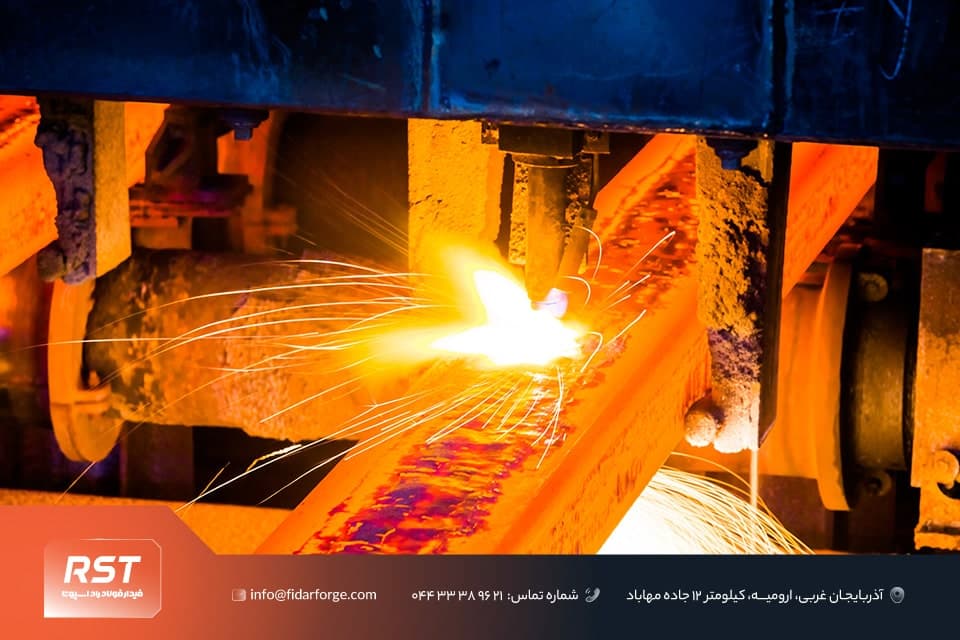
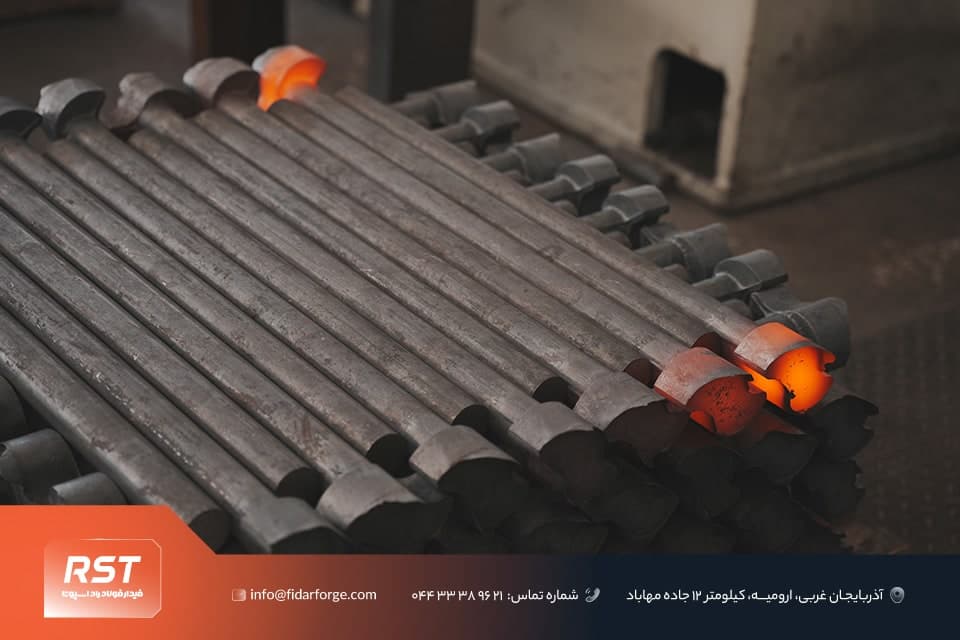
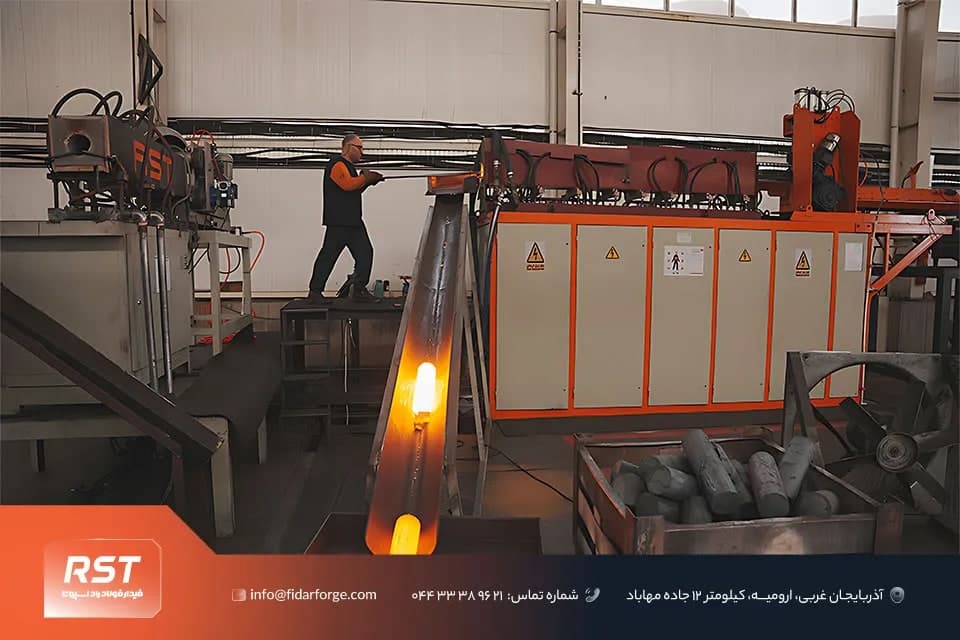
Forging is a metal-forming process in which the stock (usually an ingot or billet) is subjected to intense compressive and impact forces until it takes the desired shape. Unlike casting, the metal is never fully melted: it is shaped in the solid state, at temperatures below its melting point (but above its recrystallisation temperature in hot forging).
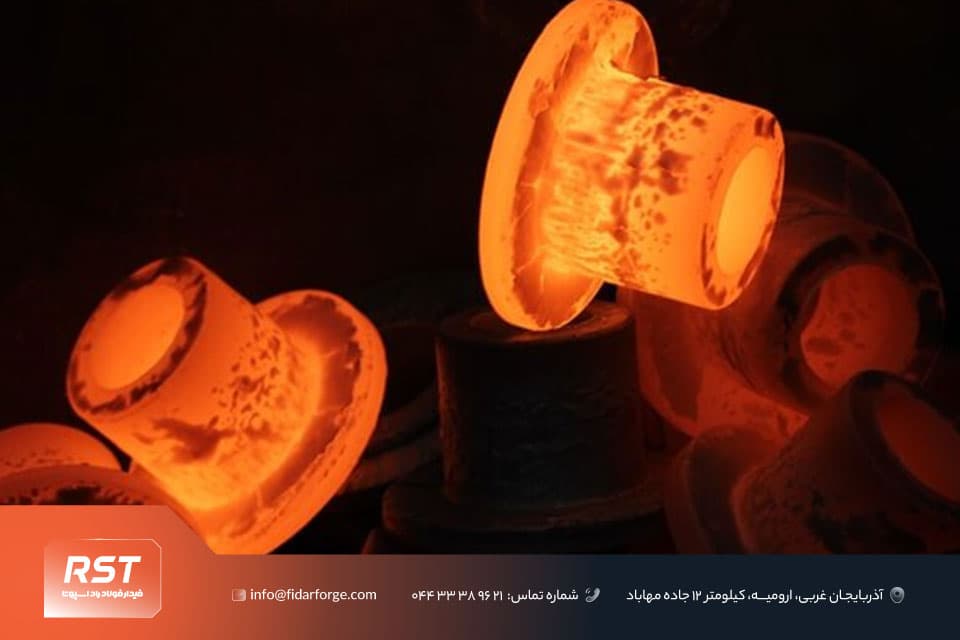
Types of forging
Forging falls into three main types; which one is chosen depends on the material, the size of the part and the final properties required:
- Hot forging: the metal is formed above its recrystallisation temperature (less force needed; large and complex parts can be formed).
- Cold forging: the metal is formed at room temperature (high dimensional accuracy and surface finish; greater final hardness and strength).
- Warm forging: the working temperature lies between the two and combines the advantages of both.
How forging differs from casting and machining
What sets forging apart from — and above — other common production methods is mainly its direct effect on the metal's microscopic structure.
1. Compared with casting: a better grain structure
| Feature | Forging | Casting |
|---|---|---|
| How it is shaped | Pressure and impact applied to solid (or semi-solid) metal | Molten metal poured into a mould |
| Grain structure | A continuous, oriented grain flow that forms along the direction of the force and adds strength. | A random, uneven grain structure. |
| Internal defects | Porosity and shrinkage voids are eliminated, giving a fully dense part. | Porosity, micro-voids and internal inclusions are likely. |
2. Compared with machining: the integrity of the metal is kept
Machining is a subtractive process that removes material from the stock. In a fully machined part the grain is cut through, which can create weak points. Forging, by contrast, shapes and guides the grain, guaranteeing the part's strength and toughness in the directions of its working stresses.
The key advantages of forged parts
The advantages below show why forged parts are a necessity, not an option, in critical industries such as aerospace and oil and gas:
- Maximum mechanical strength: thanks to compaction and an improved grain structure, forged parts have the highest yield and ultimate strength of comparable metal production methods.
- Excellent fatigue resistance: an oriented grain structure and the absence of internal defects make forged parts exceptionally resistant to cyclic loads and alternating stresses — vital for moving parts such as crankshafts and connecting rods.
- Longer life and durability: greater resistance to wear greatly extends a part's working life compared with cast or cut parts.
- Fewer internal defects and high uniformity: the high pressure of forging removes any porosity or inhomogeneity in the stock and guarantees a fully dense, uniform part.
- A superior strength-to-weight ratio: especially with forged aluminium and titanium alloys, parts can be made with the strength of steel at much lower weight — vital for weight-sensitive industries such as aerospace and motorsport.
In short, forging is not just a production method but a way of guaranteeing the structural soundness and maximum performance of parts in harsh working conditions.
Forging in the world's key industries
Today, forging leads in every industry that needs the highest levels of safety and performance. Here are its most important fields of application:
The automotive industry
Forging is central to vehicle safety and performance. Crankshafts, connecting rods, gears, wheel hubs and suspension parts all work under very high stress and pressure. Using forged parts here guarantees fatigue resistance and a long life for the engine and chassis.
Aerospace
In this industry, the smallest flaw can be catastrophic. Because aircraft parts and jet engines must withstand very high temperatures, severe mechanical stress and the fatigue of repeated flights, forged aluminium and titanium alloys are essential for critical parts such as turbine blades, jet engine fan blades and parts of the landing gear.
Oil, gas and petrochemicals
The piping and equipment in these industries work at extremely high pressures and temperatures. Forged valves, flanges and high-pressure fittings, with their dense structure and outstanding strength, are the only reliable way to prevent leaks and keep pipelines and refineries safe.
Heavy industry and industrial machinery
Hand tools, cutting tools, heavy parts for rolling mills and presses, and railway equipment (such as wagon wheels) all need parts with maximum hardness and impact resistance. Forging ensures that equipment will not fail or wear prematurely in harsh conditions.
Fidar Forge Spoota: quality assured with modern forging technology
At Fidar Forge Spoota, drawing on the know-how of our specialists and the latest forging equipment (including open- and closed-die forging), we are committed to delivering parts that not only meet industry standards but raise them. Our goal is to produce parts of the highest quality for your critical industries, so that you can innovate and grow with complete confidence.
Conclusion
Forging is more than a production method; it is a guarantee of quality. Its importance across industries — from the engine of the smallest car to the most complex aircraft parts — shows that it is the beating heart of industrial production built on strength and durability. For expert advice and to order forged parts made to the highest quality standards, contact our specialists at Fidar Forge Spoota.
Frequently asked questions about forging in industry
What is the main difference between forging and casting?+
The main difference is how the part is shaped. In casting, molten metal is poured into a mould, which can leave porosity or internal defects. In forging, the metal is shaped under pressure in the solid state, which compacts it, improves the grain structure and greatly increases the part's strength, fatigue resistance and service life.
Which industries use forged parts most?+
Industries that need the highest levels of safety, strength and durability: automotive (crankshafts, connecting rods), aerospace (turbine blades, airframe parts), oil and gas (flanges, high-pressure valves) and heavy machinery are the main users of forged parts.
What is the advantage of cold forging over hot forging?+
Cold forging, done at room temperature, gives very high dimensional accuracy, a better surface finish and less need for later machining. Hot forging, on the other hand, is better suited to larger parts and to metals that are hard to form at low temperatures.
Is forging used for small parts too?+
Yes. Forging is used for a wide range of sizes — from very small, precise fittings in medical tools to large crankshafts in diesel engines.