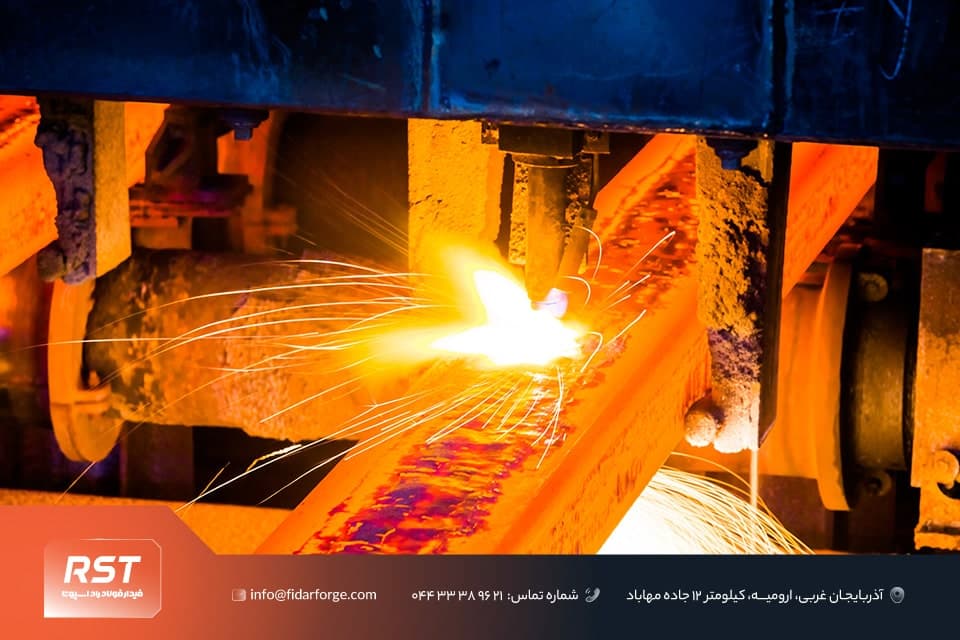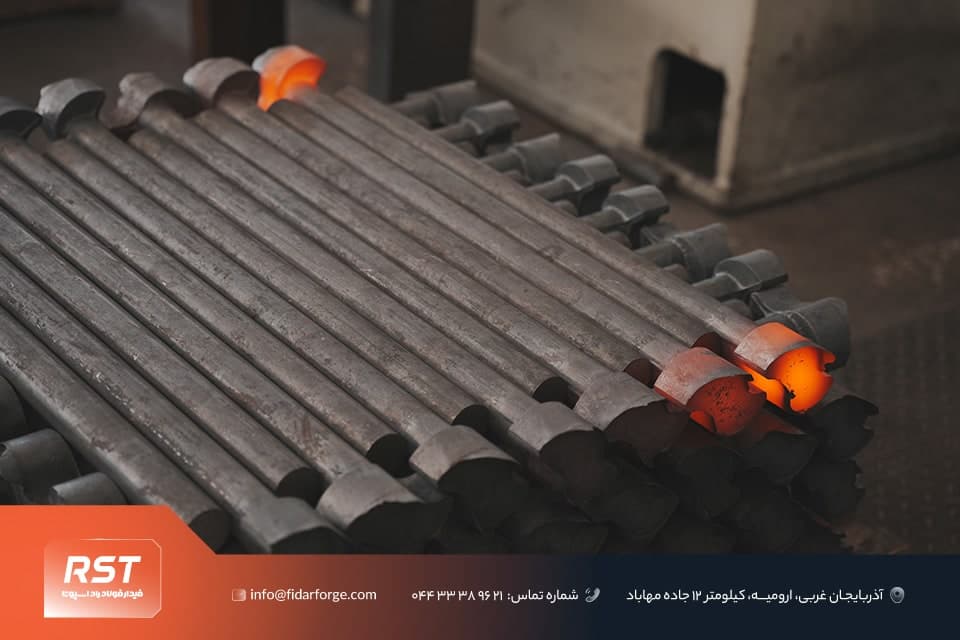
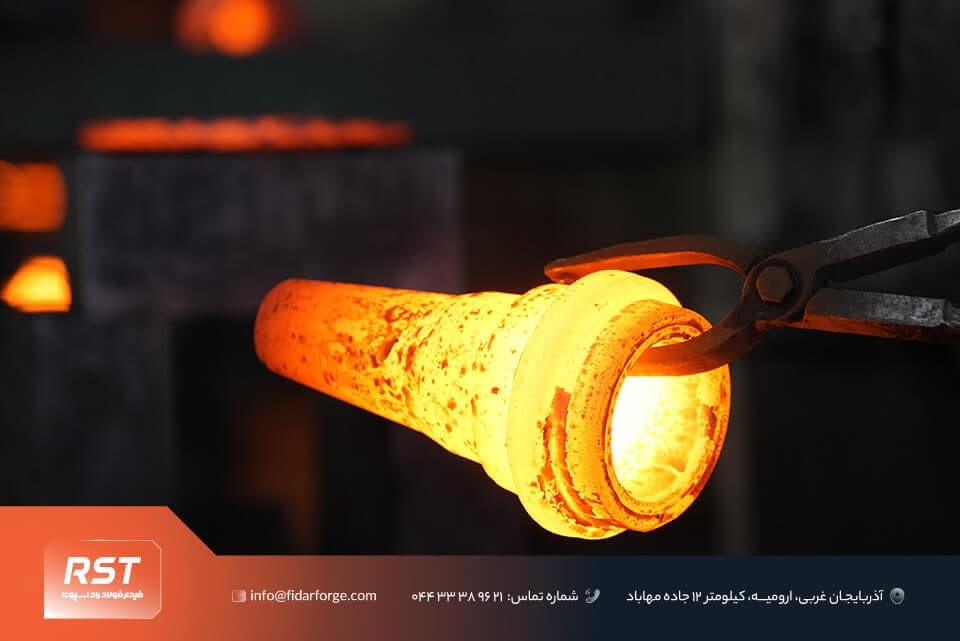
Forging is a process in which metal is shaped by force or impact without being melted. It improves the metal's mechanical properties, increases its strength and reduces internal defects.
Forging is used widely across industry, from automotive and aerospace to energy and toolmaking. Which forging process is chosen depends on the size of the part, the accuracy needed, its complexity and its industrial use. This article covers every type of forging: hand forging, power forging, open-die forging, closed-die forging, extrusion forging and precision forging.
Hand forging (hammer forging)
Hand forging, or hammer forging, is one of the oldest and most traditional ways of shaping metal. The solid metal is placed on an anvil and shaped with blows from a hand hammer or hand tools.
It is used mainly for small to medium parts of low geometric complexity, but thanks to its flexibility and the ability to make quick changes during the process, it is still used in traditional crafts, art and some engineering parts.
The process step by step
- Preparing the metal
- The metal is first cut and, for hot forging, heated to the right temperature.
- Typical temperatures are 1100–1250°C for steel and 350–500°C for aluminium.
- Preheating increases formability, reduces cracking and prevents brittleness.
- Initial forming
- The metal is placed on the anvil and given its initial shape with blows from a hand hammer or hand tools.
- At this stage the part is usually brought to an approximate shape close to its final dimensions.
- Refining the shape
- Further blows and pressure bring the part's dimensions closer.
- An experienced smith can adjust the angles, thickness and curvature of the part.
- This stage demands great care and an understanding of how the metal behaves as it deforms.
- Surface finishing and final operations
- Once the shape is reached, the part is usually machined and finished to remove irregularities and improve dimensional accuracy.
- In some cases, heat treatment after forging is used to increase hardness and strength.
Advantages
- Very flexible: the shape can be changed quickly during the process
- Little equipment needed: a hammer and an anvil are enough
- Suited to artistic and traditional pieces: complex, unique designs are possible
Disadvantages
- Limited part size and complexity: large, complex parts cannot be hand-forged
- Needs a highly skilled operator: the quality of the part depends on the smith's experience and ability
- Low output: the process is slow and unsuited to mass production
Applications
- Hand tools and decorative items: swords, artistic metalwork, handles and ornaments
- Small industrial and traditional parts: light machinery parts, metal fittings, prototypes and test parts
Expert tips
- The right preheating temperature reduces cracking and makes the microstructure more uniform.
- Blows should be controlled and even, to preserve the part's mechanical properties.
- Protective oils and lubricants reduce friction between the metal and the tools and improve the surface quality.
Power forging
Power forging is a process in which metal is shaped with mechanical hammers, hydraulic presses or mechanical presses. It has replaced hand forging and is widely used in modern industry because it can produce larger parts, in large numbers, with higher accuracy.
In power forging the force applied to the part is controllable and even, and the pressure and speed of each blow can be set precisely to optimise the metal's mechanical properties.
Equipment used
- Mechanical hammer
- For small and medium parts
- Adjustable blows of a set height and speed
- Suited to hot forging of steel and ferrous alloys
- Hydraulic press — for large parts and high accuracy
- Precise control of force and blow speed
- Suited to hard steels and sensitive alloys
- Mechanical press — applies even pressure to the part
- Suited to mass production and medium to large parts
- Can be combined with semi-closed and closed dies
- Anvils and semi-closed dies
- Metal preheating equipment and cooling systems
- Lubricants and industrial oils to reduce friction
The process step by step
- The metal is cut to the size needed
- It is preheated (for hot forging) to the right temperature: steel 1100–1250°C, aluminium 350–500°C
- The metal is placed on the anvil or between the dies
- A hammer or press is chosen to suit the size and accuracy required
- Blows or even pressure are applied
- Force, speed and number of blows can be controlled to optimise mechanical properties
- After initial forming, the part is refined and its exact dimensions are set
- Finishing operations such as machining, heat treatment and surface finishing are carried out
Advantages
- Faster production: higher speed and output than hand forging
- Less operator fatigue: mechanical force replaces human effort
- Uniformity and high quality: controlled blows give uniform mechanical properties and fewer internal defects
- Mass production: suited to automotive, aerospace and industrial machinery parts
Disadvantages
- High equipment and maintenance costs: hydraulic and mechanical machines are capital-intensive
- Limited for very complex parts: parts with complex geometry may need closed-die or precision forging
- Needs a suitable workshop: large equipment needs industrial space and infrastructure
Applications
- Automotive: crankshafts, shafts and gears
- Industrial machinery: heavy-duty parts, axles and large components
- Aerospace: engine parts, flight shafts and high-pressure components
- Other industries: test samples, military equipment and specialist tools
Expert tips
- Control temperature and blow speed: to prevent cracking, warping and changes in microstructure
- Lubrication and cooling: less friction and longer die life
- Even force: to prevent stress concentration and internal defects
Open-die forging
Open-die forging is a process in which metal is placed between two dies or anvils and shaped by blows or pressure. Unlike closed-die forging, the metal is free to move during the process, constrained only by the dies and the force applied. It is suited to large, simple parts and is used mainly in heavy industry and for parts under high loads.
The process step by step
- Preparing the metal
- The metal is cut to the right length and volume
- It is preheated (for hot forging) to the right temperature — steel: 1150–1250°C; aluminium: 350–500°C
- Placing the metal on the anvil
- The metal is placed between the dies or on the anvil
- Tools are chosen to suit the part and the thickness of the metal
- Applying force and blows
- A mechanical or hydraulic hammer applies even pressure and blows
- An experienced operator guides the metal and controls its thickness
- Refining and finishing the shape
- After initial forming, corrective blows bring the part close to its final shape
- Machining or heat treatment after forging is usually needed to reach exact dimensions and the right mechanical properties
Features
- Large parts: suited to heavy, long, high-volume parts
- Better control of the microstructure: repeated blows and pressure orient the grain and increase the part's strength
- Very flexible: the metal can be reshaped throughout the process without the constraint of a closed die
Limitations
- Lower dimensional accuracy: parts need machining, unlike closed-die forgings
- Needs a skilled operator: experience is essential to control thickness, curvature and uniform properties
- Limited for complex shapes: the part's geometry must be simple
Applications
- Large industrial axles: such as power-plant shafts, turbine shafts and industrial gearboxes
- Parts under severe loads: oil, gas and petrochemicals, cranes, structural parts and heavy machinery
- Prototypes and custom parts: test parts before mass production
Expert tips
- Blows must be controlled and even to avoid cracks and unwanted deformation
- Lubricants and industrial oils reduce friction and extend die life
- Applying force in cycles and controlling temperature give uniform mechanical properties and lower internal stresses
Closed-die forging
Closed-die forging is a process in which metal is placed inside a closed die and the final shape follows the die's geometry exactly. Unlike open-die forging, the metal cannot move freely; all deformation is controlled by the die and the pressure applied.
It is ideal for precise, complex parts with high dimensional accuracy, and is used widely in the automotive, aerospace, industrial machinery and sensitive-equipment industries.
The process step by step
- Preheating the metal (in hot forging)
- The metal is heated to the right temperature to make it more formable and reduce cracking and failure.
- Typical temperatures: steel 1100–1250°C, aluminium 350–500°C
- Placing the metal in the die
- The metal is placed carefully in the closed die so it can take the final shape with as few defects as possible.
- Dies are usually made of hard alloy steel to withstand impact and pressure.
- Applying pressure and blows
- A hydraulic or mechanical press applies even pressure or successive blows to the metal.
- The metal fills the die completely and takes its exact shape.
- This stage needs precise control of force, temperature and time to produce a uniform microstructure and the right mechanical properties.
- Removing the part and finishing
- The part is taken out of the die and, if needed, machined, heat-treated and finished to reach its final dimensions and surface quality.
Advantages
- High dimensional accuracy: parts can be made with almost no extra machining
- Less material waste: the closed die makes the best use of the metal
- Mass production: suited to identical parts of uniform quality
- Control of the microstructure: oriented grain and greater mechanical strength
Limitations
- High die cost: dies must be precise and tough, and are expensive to design and make
- Limited for very large sizes: very large or heavy parts are hard to make this way
- Needs advanced industrial equipment: hydraulic presses and preheating equipment are essential
Applications
- Automotive: gears, crankshafts, shafts and engine parts
- Aerospace: engine parts, flight shafts and high-pressure components
- Industrial machinery: precise, heavy-duty equipment and parts under pressure
- Defence and energy: parts that need high strength and precision
Expert tips
- Control temperature and press speed: to prevent cracking, warping and unwanted changes in microstructure
- Lubricate the die: less friction and longer die life
- Keep the pressure even: prevents internal defects and increases the part's strength
- Inspect after finishing: check dimensions and mechanical properties to be sure of the final quality
Extrusion forging
Extrusion forging is a process in which metal is forced at high pressure through a die with an opening to create the required cross-section. It is used mostly for bars, profiles and parts with a complex or constant cross-section.
Extrusion can be done hot or cold, but for hard metals and steel alloys hot extrusion is usually used, to make the metal more formable and reduce cracking.
Equipment used
- Extrusion dies
- The die design depends on the shape of the final cross-section
- Dies are usually made of tough alloy steel to withstand pressure and wear
- Hydraulic or mechanical press
- Applies even pressure to push the metal through the die
- Precise control of force and speed to prevent defects and cracks
- Metal preheating system
- Heats the metal to the right temperature to reduce its resistance to forming
- Typical temperatures: steel 1100–1200°C, aluminium 350–500°C
- Lubricants and industrial oils
- Reduce friction between the metal and the die
- Prevent damage to the surface of the part and the die
The process step by step
- Preparing the metal
- The metal is cut to size and preheated
- Placing the metal in the die
- The metal is placed on the die or in the press chamber
- Applying pressure and pushing the metal through the die
- Hydraulic pressure forces the metal through the die opening, forming the final cross-section
- Controlled speed and pressure guarantee surface quality and uniform dimensions
- Removing the part and finishing
- The part leaves the die and, if needed, is machined, heat-treated or finished
Advantages
- Complex cross-sections: suited to profiles and special geometric sections
- Saves material and time: even forming and less waste
- Uniform mechanical properties: a uniform microstructure and greater strength
Limitations
- Limited part length and size: very long or large parts are hard to make this way
- Needs specialised, expensive equipment: dies and presses must be tough and precise
- Needs precise temperature control: without proper heating, cracks or unwanted deformation occur
Applications
- Industrial profiles and pipes: constant or special sections for construction and industrial equipment
- Complex automotive parts: shafts and special engine and body sections
- Aerospace: profiles and parts that carry high loads and need dimensional accuracy
Expert tips
- The right lubricant reduces friction and extends die life
- Precise control of extrusion force and speed is essential to prevent cracks, waviness and warping
- Proper preheating reduces resistance to forming and makes the microstructure more uniform
- Extruded parts usually need surface finishing and heat treatment after forging
Precision (net-shape) forging
Precision forging, or net-shape forging, is a process that produces parts very close to the dimensions of the finished product, so that machining after forging is kept to a minimum.
It is well suited to parts that need very high dimensional accuracy, an excellent surface finish and high load capacity, and is used widely in aerospace, automotive, medical and sensitive industrial equipment.
The process step by step
- Preparing the metal
- The metal is cut and preheated to the right temperature to make it more formable
- Typical temperatures: steel 1100–1200°C, aluminium 350–500°C
- Placing the metal in the precision die
- The metal is placed very accurately in the die so it takes the final shape with minimal deviation
- Applying pressure and forming
- A hydraulic or mechanical press applies pressure to the metal
- The die brings the part to its final shape with precise dimensions and minimal waste
- Finishing
- In most cases very little machining is needed
- Heat treatment and surface finishing increase hardness and improve appearance
Advantages
- Very high dimensional accuracy: the part comes out almost finished, without precision machining
- Less material waste and lower machining costs
- Excellent surface quality: little surface finishing needed
- Uniform mechanical properties and microstructure: precise dies orient the grain and increase strength
Limitations
- High equipment and die costs: precision dies and advanced presses are capital-intensive
- Limited for very large sizes: not suited to large or very heavy parts
- Suited to defined volumes: very high-volume production is not economical
Applications
- Aerospace and medical: engine parts, flight shafts, tools and medical implants
- Automotive parts: gears, crankshafts, shafts and heavy-duty components
- Sensitive industrial machinery: parts that need precision, surface quality and high strength
The types of forging compared
| Feature | Open-die forging | Closed-die forging | Precision forging | Extrusion forging |
|---|---|---|---|---|
| Dimensional accuracy | Low | High | Very high | High |
| Mass production | Medium | High | Medium | High |
| Part strength | High | High | High | Medium |
| Cost | Low | Medium | High | Medium |
| Use | Large, simple parts | Automotive and aerospace parts | Sensitive, precise parts | Complex industrial sections |
Summary
The choice of forging process depends on the size of the part, the accuracy needed, the industrial use and the budget:
- Open-die forging: suited to large parts that carry high loads
- Closed-die forging: high-accuracy parts and mass production
- Precision forging: sensitive parts of excellent quality with minimal machining
- Extrusion forging: profiles and complex industrial sections
New technologies, simulation and advanced equipment have made forging a key tool of modern industrial production, producing high-quality parts with a long service life.
Frequently asked questions
What is forging, and how does it differ from casting?+
Forging is a process in which solid metal is reshaped by force or impact without being melted. In casting, by contrast, the metal is first melted and then poured into a mould. Forging improves the metal's mechanical properties, increases its strength and reduces internal defects.
What are the main advantages of forging?+
Better mechanical properties and high strength, fewer cracks and internal defects, longer part life, and a uniform microstructure.
What decides which forging process to use?+
The size of the part, the accuracy needed, the complexity of its geometry, the production volume and its industrial use.
How does hand forging differ from power forging?+
Hand forging is done with a hammer and human strength; it is slow and needs great skill. Power forging is done with industrial presses and hammers, giving faster production, more uniform quality and the ability to mass-produce.
What kinds of parts is extrusion forging used for?+
Mostly for constant and complex cross-sections such as profiles, pipes and parts with special geometry in the automotive, aerospace and construction industries.
How does precision (net-shape) forging differ from the others?+
Parts are produced almost at their final dimensions and need very little machining. It suits precise, sensitive parts such as aerospace, medical and automotive components.
What is the benefit of using lubricants in forging?+
Lubricants reduce friction between the metal and the die or anvil, improve the surface quality, and extend the life of tools and dies.