About us
About Fidar Forge Spoota
Fidar Forge Spoota Company began its activity in Urmia in 2021 (1400 in the Persian calendar) and, relying on experience and modern technologies, has become one of the reputable manufacturers of industrial parts.
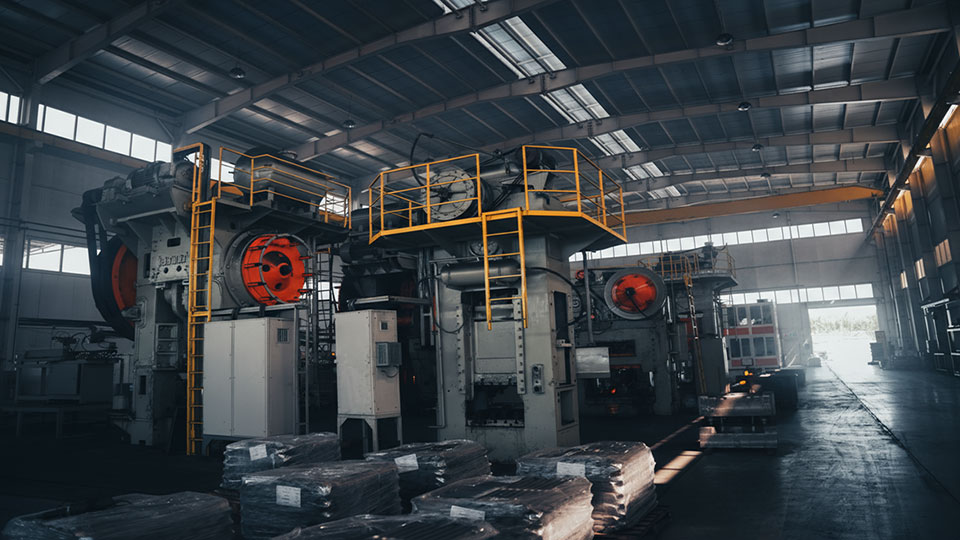
With access to modern equipment including forging presses up to 2500 tons, industrial hammers, induction furnaces, cutting machines, and shot blasting systems, the company is capable of producing precise, durable components that comply with international standards.
The main goal of Fidar Forge Spoota is to provide high-quality products and reliable solutions for the country’s strategic industries.
Factory Introduction
Fidar Forge Spoota production line
The production line of Fidar Forge Rad Spouta Company is designed based on an engineered and coordinated structure that follows a fully controlled and organized process, from raw material preparation to the delivery of final parts. In this facility, metal forming operations are carried out using precise methods and planned heat treatment stages to enhance the mechanical properties and strength of each component to the highest level.
After the forging process, the parts enter machining, dimensional correction, surface finishing, and final inspection sections, where the quality control team evaluates production accuracy according to defined standards.
The integration of production stages, continuous monitoring, and process data recording have enabled the Fidar Forge Rad Spouta production line to manufacture complex industrial components with high repeatability, consistent precision, and stable quality.
Fidar Forge Production Line
Introduction to Fidar Forge Production Line

Order Product

Product Design
Mold Manufacturing
Cutting Operations
Forging
Quality Control
Delivery
Customer Satisfaction
Order Product

Product Design

Mold Manufacturing

Cutting Operations

Forging

Quality Control

Delivery

Customer Satisfaction
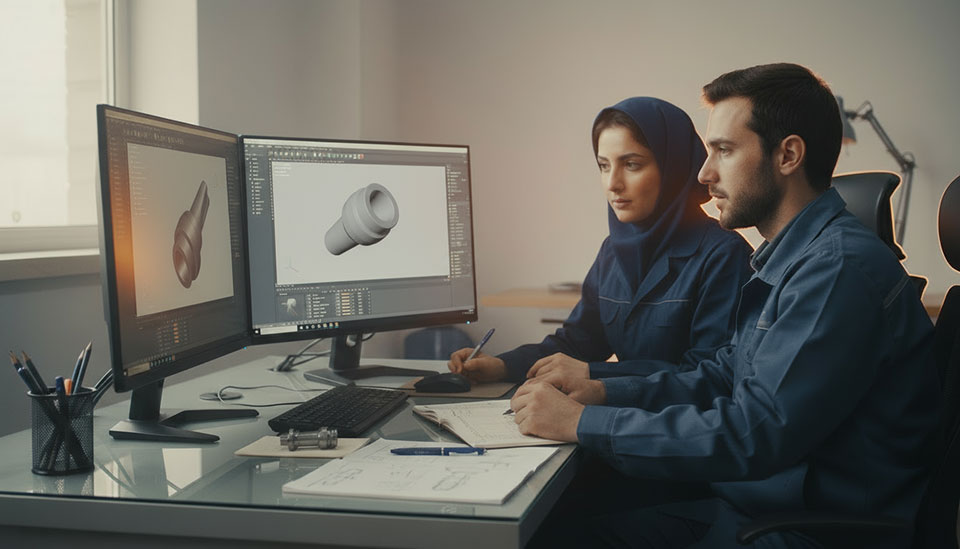
Design & Engineering Unit
Design & Engineering Services
The company’s design and engineering team consists of metallurgy and mechanical specialists who use advanced CAD/CAM software and forging process simulations to provide innovative solutions. This unit’s services include:
- 3D design and reverse engineering of components
- Forging process simulation to reduce material waste and improve mechanical properties
- Providing cost-effective solutions for mass production
- Close collaboration with customers in product development
Quality Control Unit
Quality Control Services
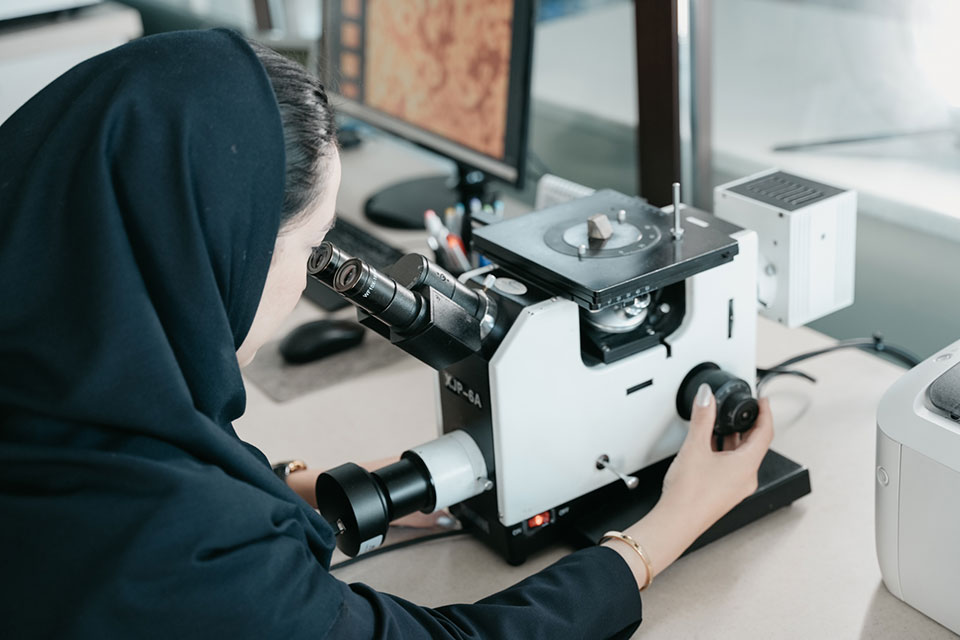
The company is equipped with a modern laboratory and advanced quality control systems that ensure the production of components in compliance with international standards.
Fidar Forge Spouta Quality Control Services:
- Tensile test to evaluate strength and mechanical properties
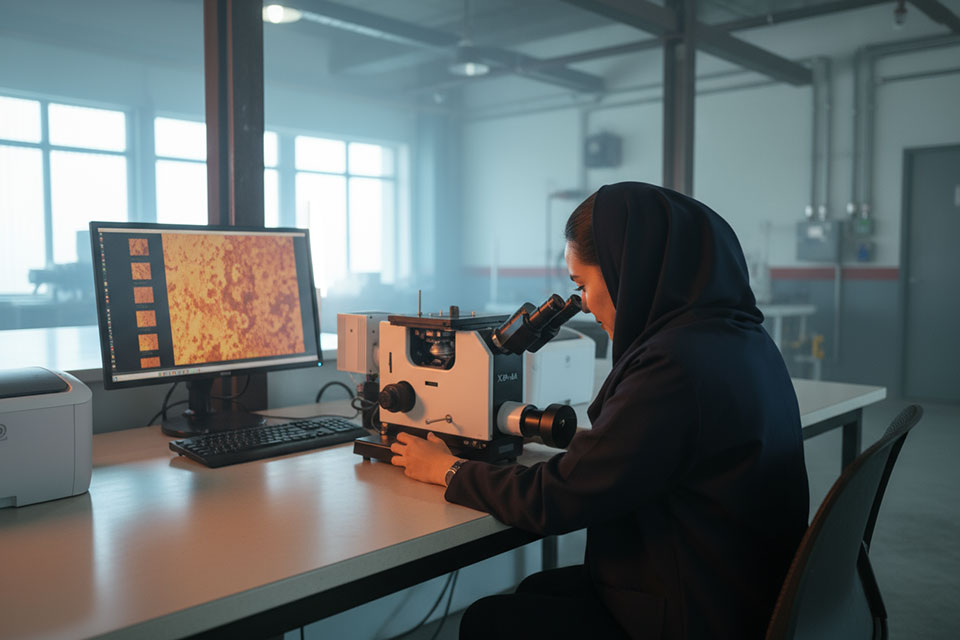
- Metallography using microscopes to analyze metal microstructures and heat treatment effects
- Non-destructive testing (NDT) including UT, MT, and PT to detect surface and internal defects
Quality Management System
Introduction to the Quality Management System
At Fidar Forge, quality is not just a slogan; it is one of our core organizational values and commitments. We believe that quality is the result of attention to detail, continuous improvement, and adherence to international standards.
The implementation of a Quality Management System based on ISO 9001:2015 ensures that all production, control, and delivery processes at Fidar Forge are carried out with precision and full compliance with global standards. Our goal is to provide products that not only meet customer requirements but also exceed their expectations.
Press Machines
Types of Press Machines
- 1600-ton crank press
- 500-ton crank press
- 1600-ton screw press
- 2500-ton crank press
Shot Blasting
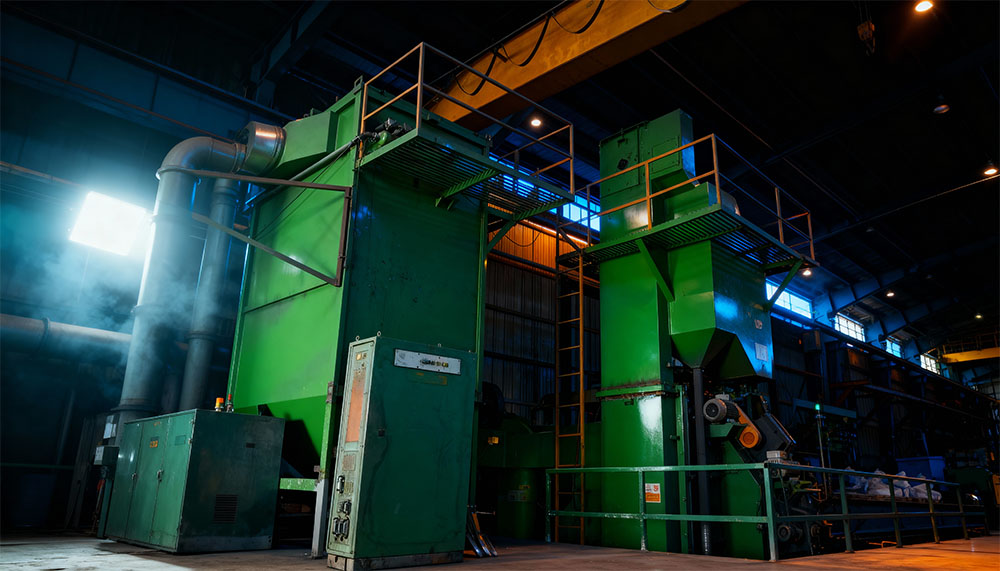
Introduction to the Shot Blasting Machine
A shot blasting machine is used for cleaning, rust removal, and surface preparation of metals by blasting steel shots onto the surface. The machine uses turbines or compressed air to propel the shots at high speed, removing contaminants and creating a controlled surface roughness.
Its types include hook-type, drum-type, tunnel-type, and rotary table machines, and it is widely used in industries such as automotive, foundry, and coating/painting applications.
Induction furnaces
Types of induction furnaces
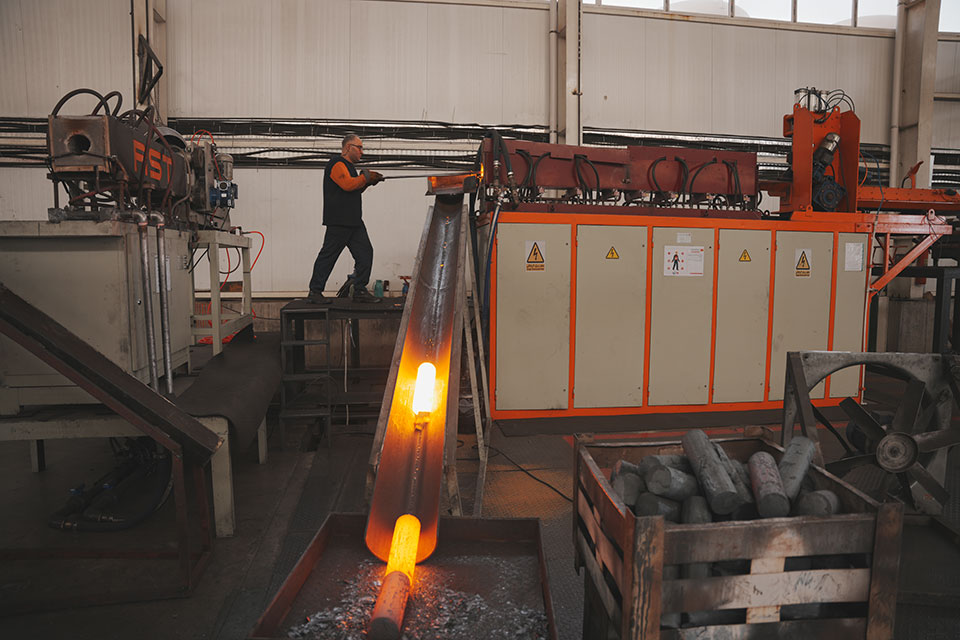
- 1200 kW induction furnace
- 1000kW induction furnace
- 600kW induction furnace
- 400kW induction furnace
Hammer machine
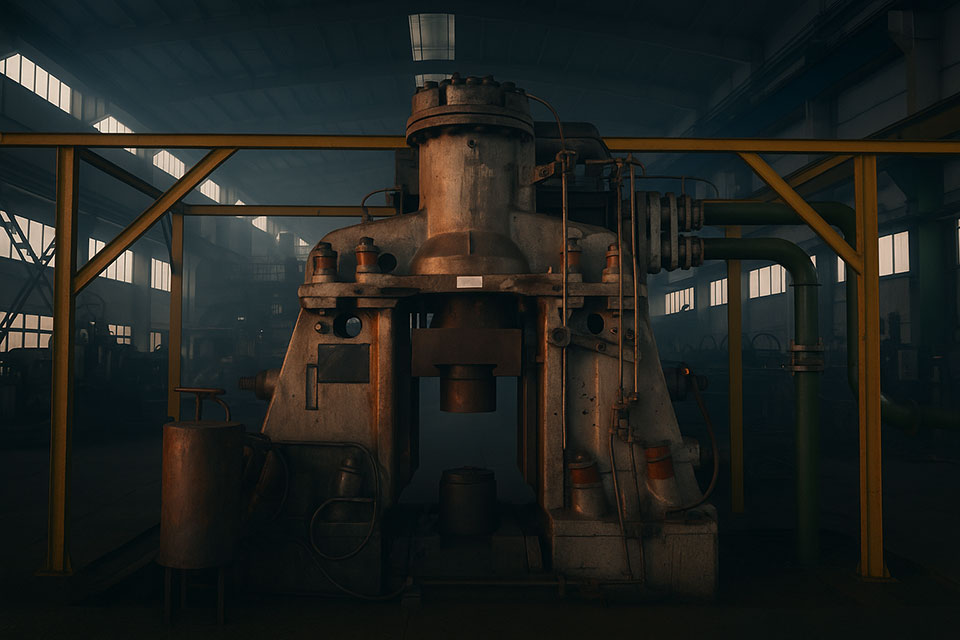
Introduction to 70 kJ hammer
The 70 kJ hammer is a powerful tool for ultra-heavy-duty operations. This machine is used in the demolition of large concrete structures, breaking massive rocks, and excavation in hard ground conditions.
General specifications:
- Impact energy: 70 kilojoules
- System: Hydraulic or pneumatic
- Applications: Heavy demolition and excavation